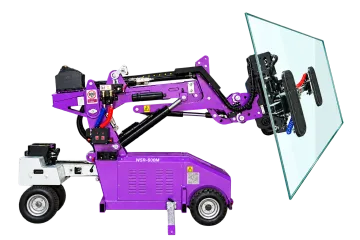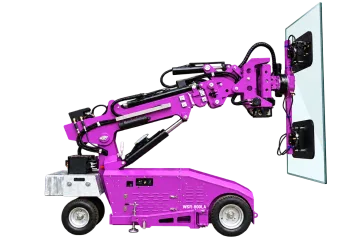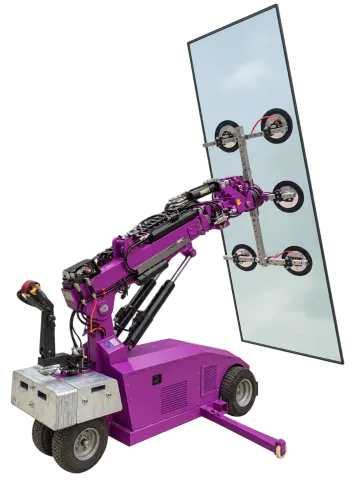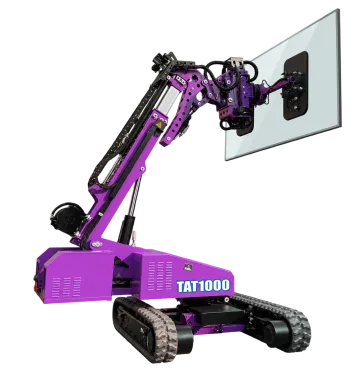
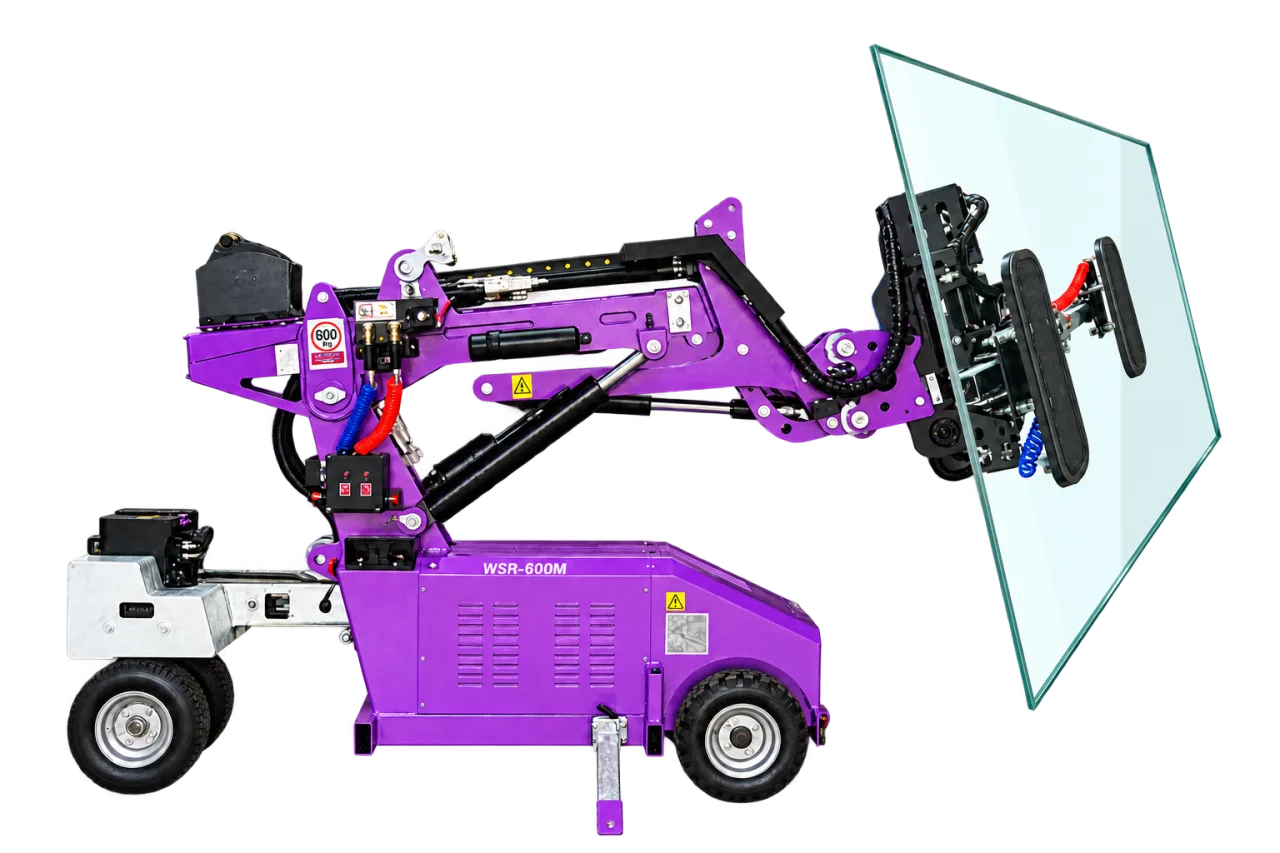
A cordless glass lifting robot runs its travel drive, hydraulic power pack and dual-circuit vacuum pumps from an onboard DC battery bank—never directly from the AC wall cord. Good charging habits therefore protect both shift runtime and vacuum-holding safety on site.
1. Low-battery warnings and end-of-shift shutdown sequence
Operator manuals for the WSR series establish a strict boundary: never operate a glass installation robot when a low-battery warning appears on the battery indicator. Voltage sag under simultaneous boom lift and pump demand can trigger low-voltage protection or slow hydraulic response while a pane is suspended.
- End-of-shift gauge check: Check the battery state-of-charge indicator at the end of daily glazing work rather than waiting for deep discharge on the next morning shift.
- Turn off key and main isolator: Park on level ground and safely unload the glass before charging. Follow the supplied model’s shutdown and charger-connection sequence; the WSR600 manual calls for switching off its key and main power switch.
- Inspect cables and connectors: Never start a charge if insulation cuts, crushed plugs or loose terminals are visible on the charging lead.
2. Charging area, cooling interval and AC supply verification
For the WSR600, its manual requires the battery to cool before charging. Use a dry, ventilated charging location and inspect the cable before connection. For another model or battery system, follow the delivered battery and charger instructions for temperature limits and charging sequence.
Always read the nameplate on the supplied charger before plugging into site temporary power. Depending on model and order specification, Easytech glazing robots are supplied with wide-input chargers (such as AC110–220 V or 110–240 V, 50/60 Hz) or single-voltage chargers matched to the destination country. If your robot stops driving or lifting after charging, follow our glass robot drive, hydraulic and vacuum fault checks.
3. Battery bank architectures across Easytech glass robots
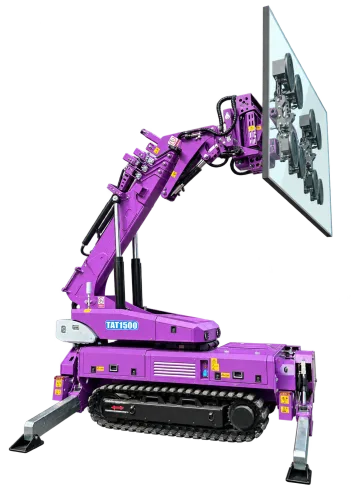
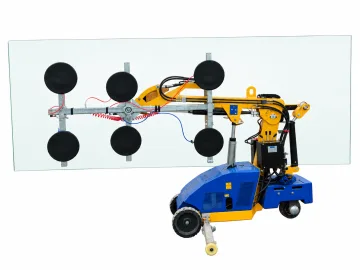
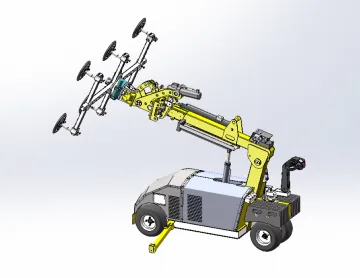
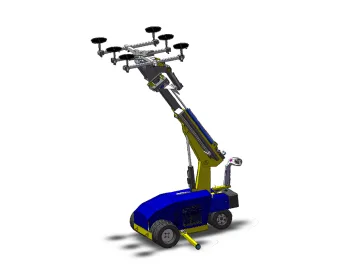
Easytech wheeled and tracked glazing robots use three documented onboard DC battery architectures depending on chassis size, travel motor power and duty class. Never mix replacement battery chemistries or charger profiles across different series:
Representative models | Documented battery bank | Documented charger / DC bus | Practical ownership note |
|---|---|---|---|
DC12 V × 2 series pairs (140 Ah × 2 on WSR-600M; 150 Ah × 2 on WSR-800L; 190 Ah × 2 on WSR-800LA) | 24 V DC system; AC110–220 V / 110–240 V charger input (confirm supplied unit) | Replace paired 12 V blocks as a matched set so bank balance is maintained. | |
12 V / 100 Ah × 2 (LEG-600) and 12 V / 150 Ah × 2 (LEG-800S) | DC 24 V operating bus; 110–220 V charger (~5 h documented charging time) | The listed charging time is model-specific; use the supplied charger’s completion indication and allow for the starting charge level. | |
Four 24 V / 55 Ah battery units in parallel (24 V / 220 Ah total, 5.28 kWh) | 24 V DC bus supplying 1.2 kW hydraulic unit, drive & dual vacuum; 16 A, 110–240 V charger | Parallel 24 V layout keeps system voltage at 24 V while scaling amp-hour reserve. | |
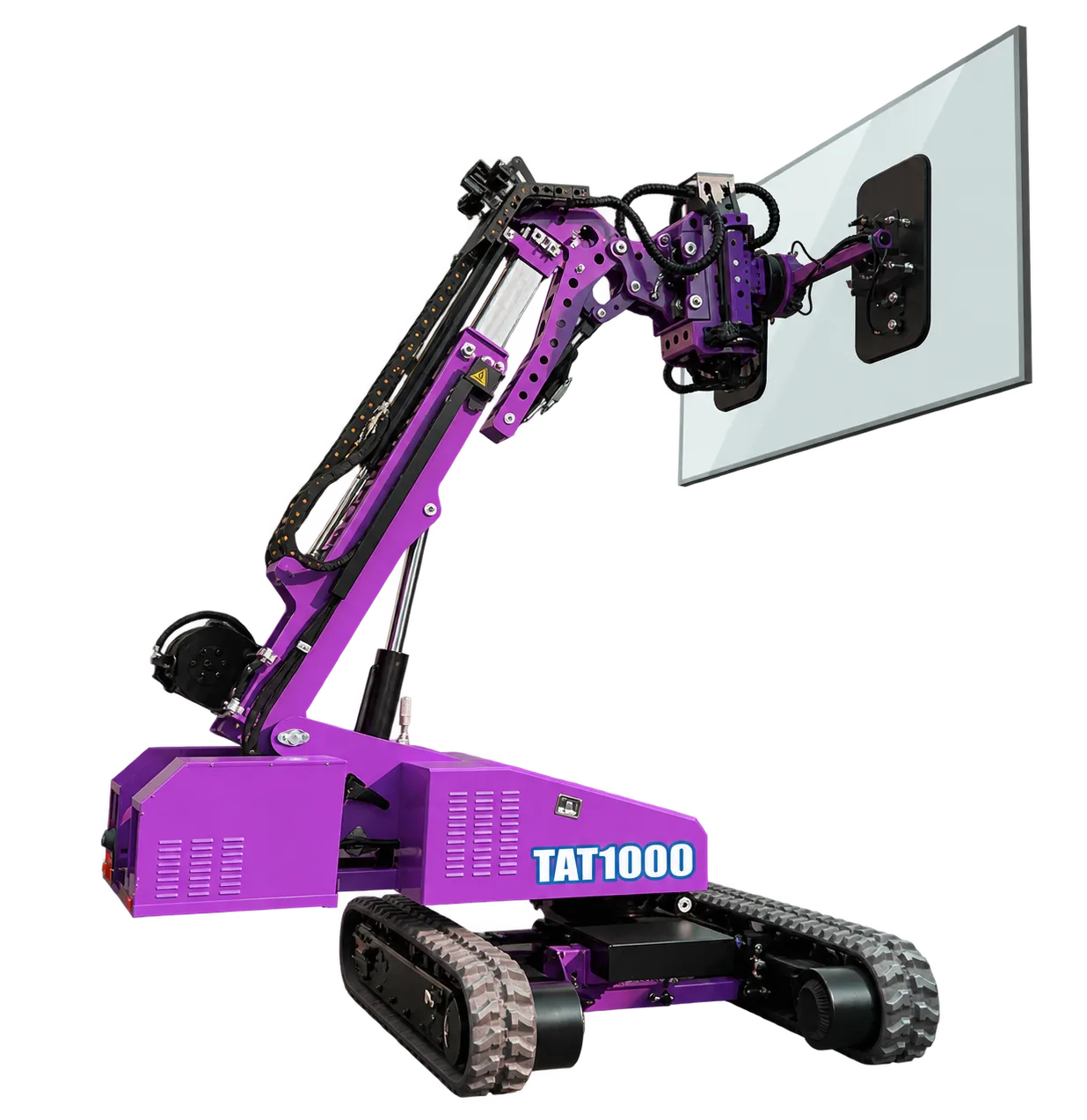
Lithium iron phosphate (LFP) 51.2 V / 150 Ah × 2 (TAT 1000) and 51.2 V / 173 Ah × 4 (TAT 1500) | High-capacity 51.2 V LFP traction & hydraulic architecture for 4–8 kW tracked travel | Use only the dedicated LFP charger supplied for the 51.2 V battery management system. |
4. How vacuum leak tightness protects shift battery runtime
Glass lifting robots conserve battery energy through automatic pressure-switch control: on the WSR600 vacuum circuit, for example, the vacuum pump stops automatically once top vacuum reaches -75 kPa (75%) and restarts only when circuit pressure decays to the -60 kPa (60%) threshold.
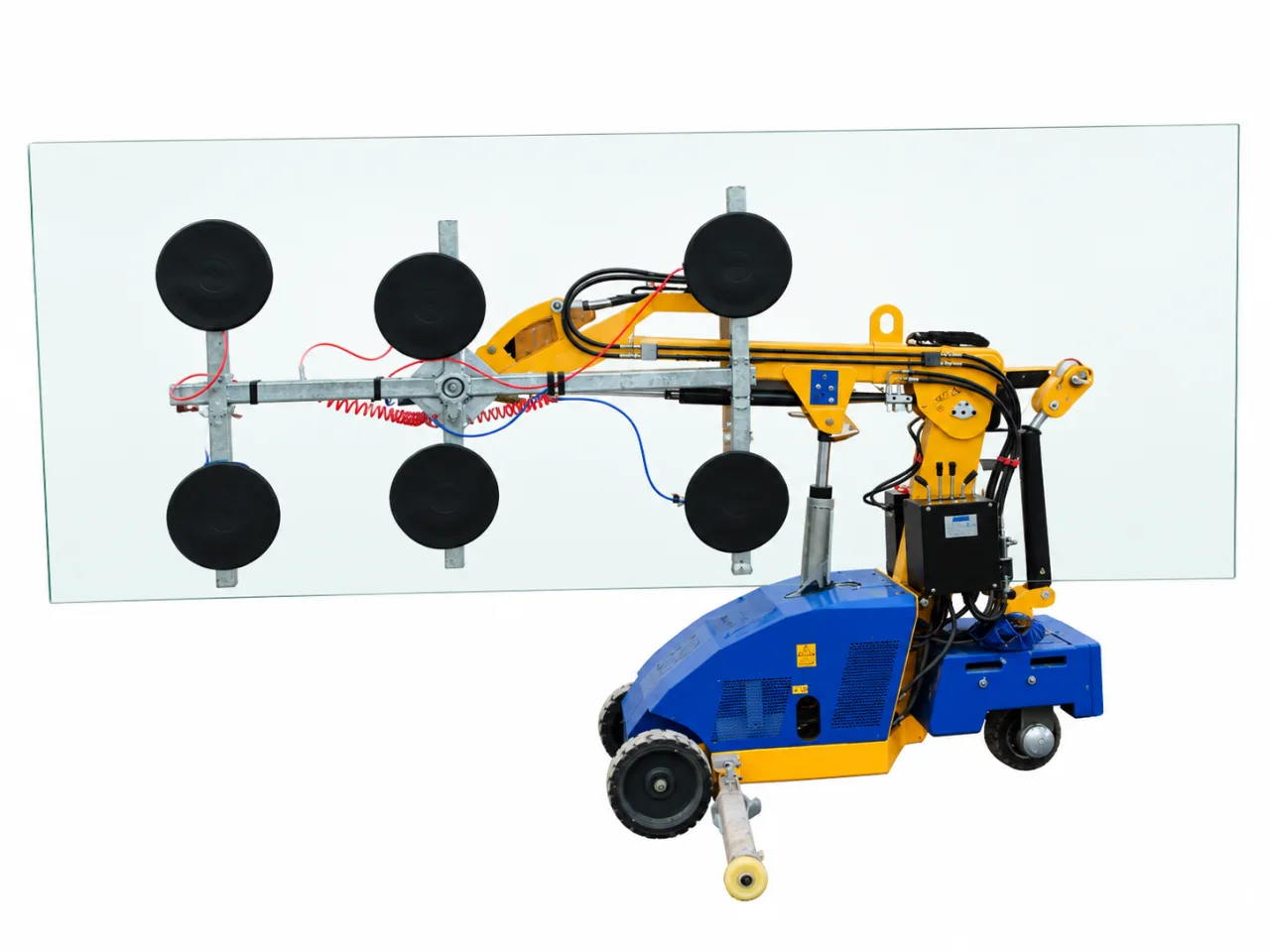
When suction pad lips are nicked, dusty or resting over frame tape, constant micro-leaks force the vacuum pumps to cycle every few seconds—draining battery capacity and heating pumps unnecessarily. For the WSR600 only, follow the manual’s static leak-check procedure in the prescribed safe, supported condition: it specifies less than 10% vacuum loss over 5 minutes after reaching its test vacuum and switching off power. This is a leak-test criterion, not a permitted holding time for a suspended load. Do not switch off power to experiment with a suspended load and consult pump cycling and vacuum alarm troubleshooting if rapid restarts appear.
5. Long-term storage between glazing projects
When a robot will stand between projects, prepare its battery for storage rather than leaving the machine at the end-of-shift state of charge. The storage procedure depends on the supplied battery system; connected auxiliary loads can continue drawing power.
- Storage procedure for the supplied battery: The WSR600 manual requires a full charge before prolonged storage. For an LFP-equipped machine, follow its supplied battery and BMS storage instructions, including the specified state of charge and inspection interval. Do not apply the WSR600 storage rule to a different battery system.
- Isolate main power & store dry: Switch off the ignition key and main isolator, clean and dry suction pads without solvent residue, and park indoors out of frost and rain.
- Pre-deployment check before next site: Top up charge, verify vacuum hold and review boom outreach against the glass robot load chart guide and indoor WSR-800LA positioning checks before dispatch. Need replacement pads, chargers or a new robot configuration? Request an equipment quotation.