
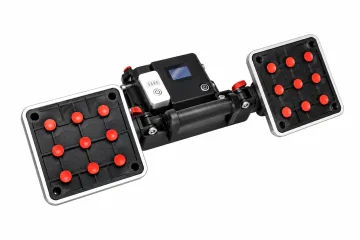
ETJSZ-N300
ETJSZ-N300 Twin-Pad Portable Vacuum Lifter
- Recommended horizontal suction load
- 300 kg
- Drive
- Lithium battery
Equipment family
Compare stone-slab transfer, pneumatic tilting and mobile paver placement. Check surface permeability, pad arrangement and the correct handling-mode rating.
Stone handling covers workshop slab transfer and site placement, which need different equipment. Decide whether the workpiece stays horizontal, turns from a rack or is positioned by a mobile paving machine before comparing loads.
Filters include documented loads and overlapping conditional ranges. A range does not guarantee its upper value for every workpiece. Check material, seal, orientation and complete configuration.
ETJSZ-N300
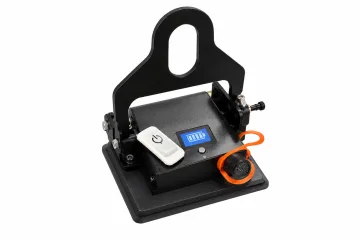
ETJSZ-N100
ETJSZ-N100
ETJSZ-N200
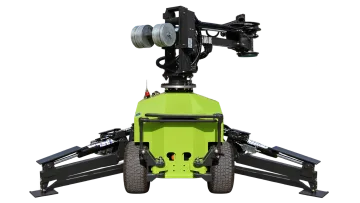
ET-PV-150
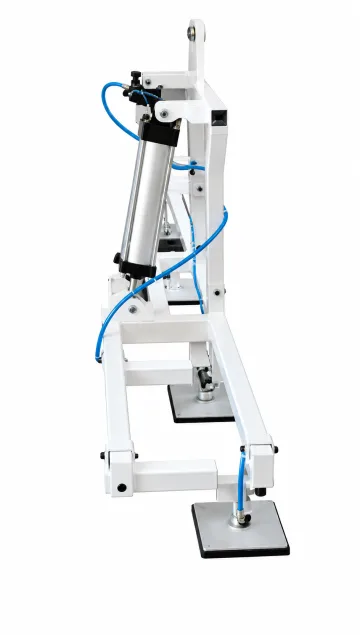
ET-ST-TILT-300
ET-ST-TILT-400
ET-ST-TILT-500
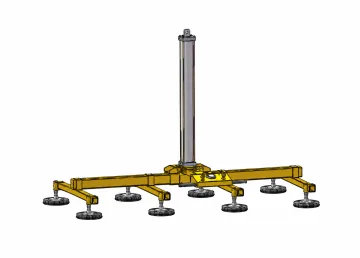
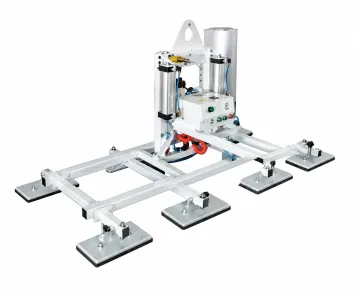
ET-ST-ROUGH-01
ET-ST-ROUGH-02
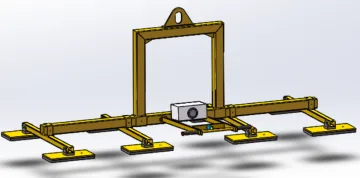
ET-ST-ROUGH-03
Try a shorter model name or clear the load filter.
Task | Equipment | Key values or boundary |
|---|---|---|
300 kg, six Ø200 mm pads; horizontal gripping. | ||
Pneumatic slab tilting | 500 kg, eight 200 × 400 mm pads and pneumatic 90° tilting. | |
Rough-surface contact with a reviewed source | 300 kg rated configuration with a foam pad, compressed-air vacuum generation and pneumatic 90° tilt; assess the actual material and seal. | |
150 kg handling and a separate 600 kg pallet-fork mode. |
Model / configuration | Rated load | Pad dimensions | Number of pads | Air source |
|---|---|---|---|---|
300 kg | 200 × 400 mm | 4 pcs | External compressed air | |
400 kg | 200 × 400 mm | 6 pcs | External compressed air | |
500 kg | 200 × 400 mm | 8 pcs | External compressed air |
The choice is not simply the number of pads. Check whether every pad can seat on the smallest slab and whether the largest or most fragile slab is supported appropriately. Cutouts and narrow bridges can make a workpiece unsuitable even below the load limit.
A rough contact face can need a conforming seal, while a permeable material needs an appropriate source and contact arrangement to manage leakage. Surface moisture, dust and treatments add further conditions. Do not transfer a smooth, dry slab result to all stone or concrete products.
No. ET-PV-150 uses 150 kg for handling; 600 kg is separately specified for the pallet forks.
No. The source, contact geometry and actual workpiece leakage have to be reviewed as a complete lifting arrangement.
Send surface photographs and representative material details, dimensions, weight, cutouts and required orientation. For paving, include ground/access information and the laying pattern; for slab transfer, include rack/table and supporting-crane details.
LET’S DEFINE YOUR APPLICATION
Tell us what you lift, where it moves and how it needs to arrive.