
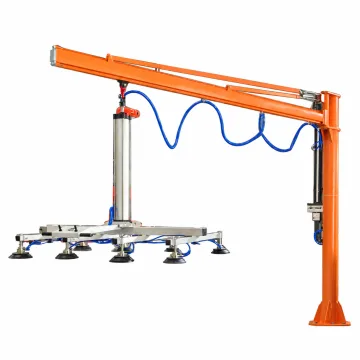
ETJSB-Q100-B3M
ETJSB-Q100-B3M Pneumatic Jib Crane Vacuum Lifting System
- System rated load
- 100 kg
- Drive
- Compressed air
Equipment family
Compare bare crane structures and complete vacuum lifting stations. Check mounting, coverage, lifting stroke, slewing and the complete suspended load.
Crane structure, lifting device and end tool are separate supply items unless listed as a complete system. Define the coverage area and load path first. A jib length is a horizontal dimension; it does not tell you the usable lifting stroke or hook height.
Filters include documented loads and overlapping conditional ranges. A range does not guarantee its upper value for every workpiece. Check material, seal, orientation and complete configuration.
ETJSB-Q100-B3M
ETJSB-Q100-B4M
ETJSB-Q300-B3M
ETJSB-Q300-B4M
ETJSB-Q500-B3M
ETJSB-Q500-B4M
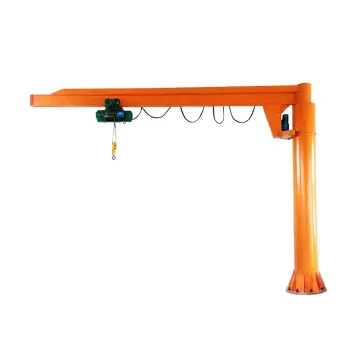
ETJSB-D300-B3M
ETJSB-D300-B4M
ETJSB-D500-B3M
ETJSB-D500-B4M
ETJSB-D1000-B3M
ETJSB-D1000-B4M
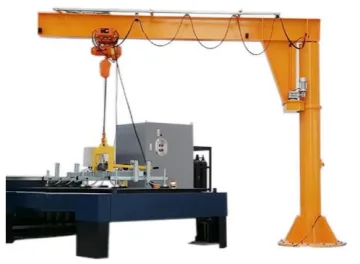
ETJSB-D1000-B3M
ETJSB-D1000-B4M
ETJSB-D2000-B3M
ETJSB-D2000-B4M
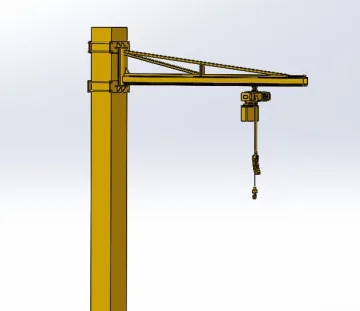
ET-CR-POST-100
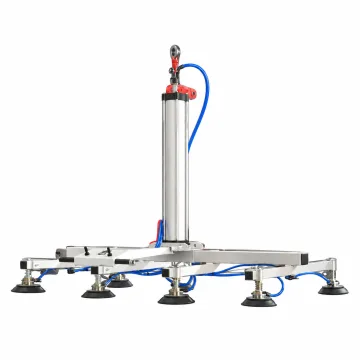
ET-CR-CYL-100
ET-CR-POST-300
ET-CR-CYL-300
ET-CR-POST-500
ET-CR-CYL-500
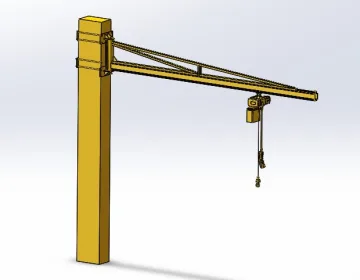
ET-CR-WALL
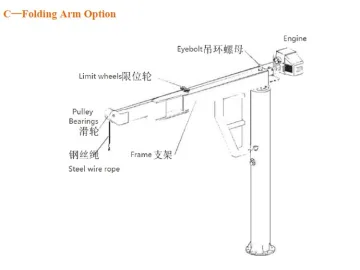
ET-CR-FOLD
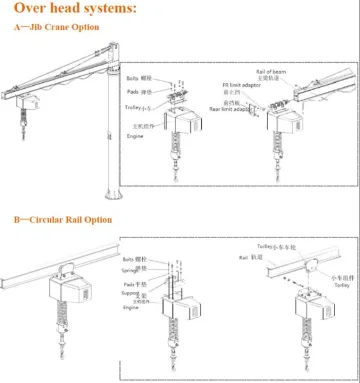
ET-CR-RAIL
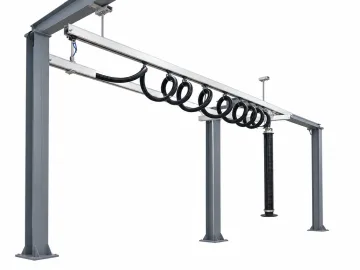
ET-CR-GANTRY
Try a shorter model name or clear the load filter.
Format | Equipment route | Layout decision |
|---|---|---|
Local coverage around a column; foundation and working radius. | ||
Suitable existing/design support and connection reactions. | ||
Joint positions needed to reach around obstacles. | ||
Defined travel area, supports and headroom. | ||
Clear span between legs, height and permitted relocation scope. |
Record | Included scope |
|---|---|
500 kg column and 3 m jib; lifter excluded. | |
ET-CR-CYL-500 — Pneumatic Cylinder & Vacuum Pad Frame Assembly | 500 kg pneumatic cylinder, pad frame and figure-8 connector; column excluded. |
These separate scope descriptions do not automatically approve combining any column and lifting assembly. The final order must identify the compatible structure, lifting unit, end tool, interfaces and installation requirements.
Model / configuration | System rated load | Jib length | Lifting stroke | Maximum workpiece dimensions |
|---|---|---|---|---|
500 kg | 3000 mm | 100–1100 mm | 3000 × 1500 mm | |
ETJSB-D500-B3M — Electric Jib Crane Vacuum System with Manual Slewing | 500 kg | 3000 mm | 0–1600 mm | 3000 × 1500 mm |
ETJSB-D1000-B3M — Electric Jib Crane Vacuum System with Powered Slewing | 1000 kg | 3000 mm | 0–2000 mm | 3000 × 1500 mm |
ETJSB-D1000-B4M — Electric Jib Crane Vacuum System with Powered Slewing | 1000 kg | 4000 mm | 0–1600 mm | 3000 × 1500 mm |
The pneumatic Q500-B3M lists 0.6–0.8 MPa air supply. Electric D-series configurations list 380 V, with manual or powered slewing identified by the actual record. The powered 4 m arrangement has a shorter listed lifting stroke than the powered 3 m arrangement. Do not choose by reach alone.
Provide the actual floor or building-support information for the proposed mounting. Anchor dimensions, concrete requirements and connection details must come from that structural design. A photograph of a similar jib is not a foundation specification.
No. The specified ETJSB-D2000-B3M and B4M system rating is 1,000 kg. Use the parameter table, not the model digits.
Only the exact equipment instructions can establish permitted relocation and loaded movement. Do not infer it from wheels or the family name.
Send a scaled layout with all pickup/placement points, required height, complete suspended load, obstructions, mounting location, floor/support information and utilities. Identify whether the quote includes a bare structure or a complete lifting station.
LET’S DEFINE YOUR APPLICATION
Tell us what you lift, where it moves and how it needs to arrive.