Identify the configuration represented by the chart
Check the model, installed attachment, arm arrangement and any required counterweight or setup condition. Match the chart revision to the quoted machine. Equipment weight, counterweight and permitted payload describe different quantities.
Chart/document item | What to verify |
|---|---|
Height and reach axes | Units and the reference point used for each dimension. |
Load zones or working positions | The permitted load at the required position, not only the headline maximum. |
Arm/attachment configuration | Extensions, frame and positioning arrangement to which the chart applies. |
Setup conditions | Counterweight and other specified setup requirements. |
Travel versus lifting | Which activities and machine states the instructions permit. |
Plot the actual installation point
Measure the required forward reach and height with the glass in its intended final orientation. Include the clearances needed to approach, position, support and release it. Compare every relevant position through the sequence; checking only the final point can miss an earlier constrained position.
Keep Easytech configuration limits distinct
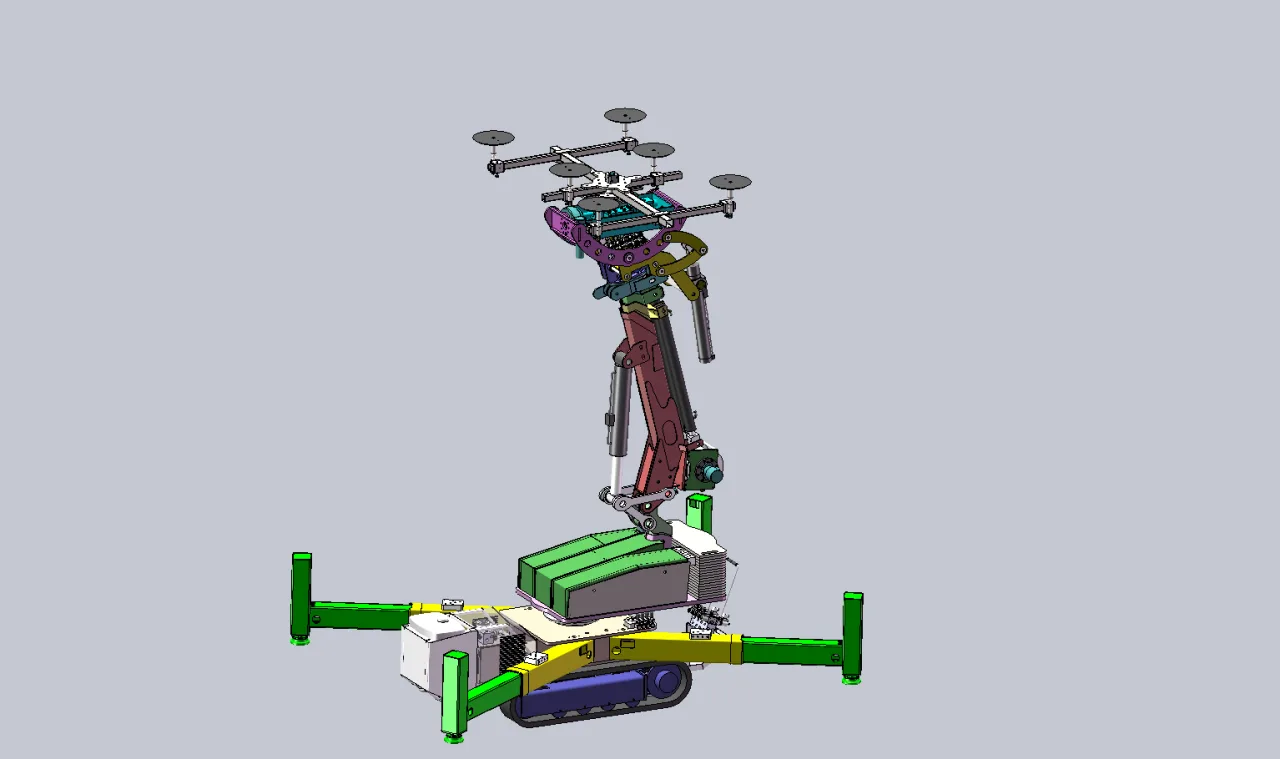
For the ST1500 tracked configuration, the documented machine limits distinguish 1,500 kg retracted and 400 kg extended. An 800 kg vacuum-head figure is a separate attachment limit, not a replacement for the machine working envelope. The entire setup must satisfy all applicable limits.
For ST800, approximately 2,500 kg excluding the 500 kg counterweight describes equipment weight. It is not a payload rating. Use the model specification and matching chart when arranging transport, site access and lifting operations.
When the chart is not sufficient
If the required position, attachment or setup cannot be identified clearly, request the configuration-specific chart and instructions before selecting the machine. Do not interpolate an undocumented capacity or borrow a chart from a similar model.
Use this sequence when the specification and chart seem different
Step | Question |
|---|---|
1. Identify | Is the chart for this model, attachment and setup revision? |
2. Locate | Where are height and reach measured from? |
3. Plot | Does each required movement position fall within a stated zone? |
4. Check other limits | Does the attachment/contact arrangement also permit the load? |
5. Resolve | Is any position, setup or value unclear? Obtain the exact chart instead of interpolating. |
ET-GR-LEG-ST1500 — Tracked Glass Lifting Robot — ST1500 separates 1,500 kg retracted, 400 kg extended and an 800 kg vacuum-head figure.
For example, the 800 kg head figure cannot make a fully extended 800 kg lift permissible when the machine’s stated full-extension load is 400 kg. Equally, the 1,500 kg retracted machine figure does not turn the 800 kg head into a 1,500 kg gripping attachment. This illustrates how multiple limits apply; the full chart and setup remain necessary.
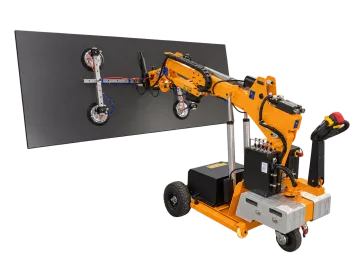
WSR-400MINI — Wheeled Glass Installation Robot — WSR-400MINI has a 3,200 mm maximum height, but the maximum height is not the full-load height. Review its matching chart and attachment arrangement.
Compare robot configurations · Robot versus suspended lifter · Prepare a glazing robot quotation