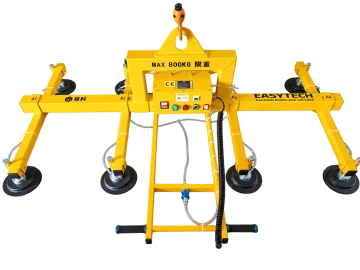
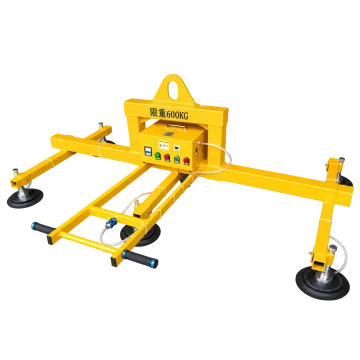
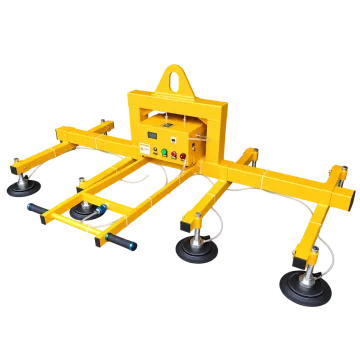
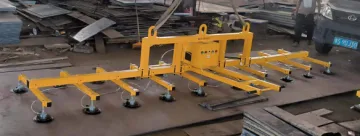
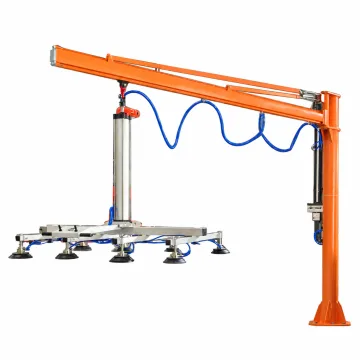
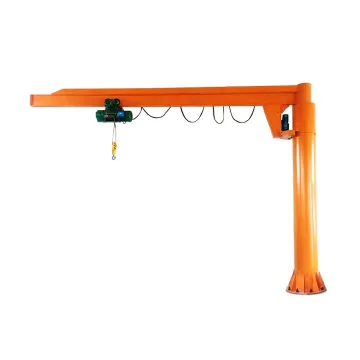
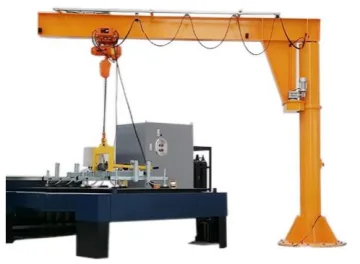
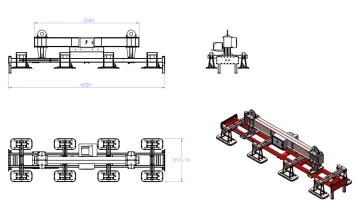
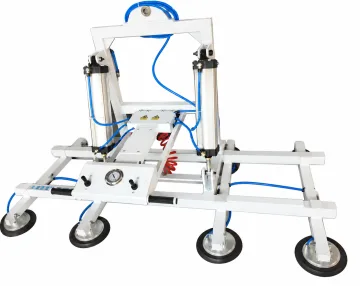
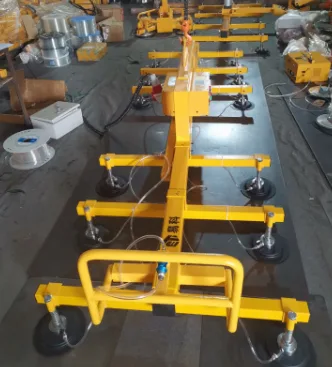
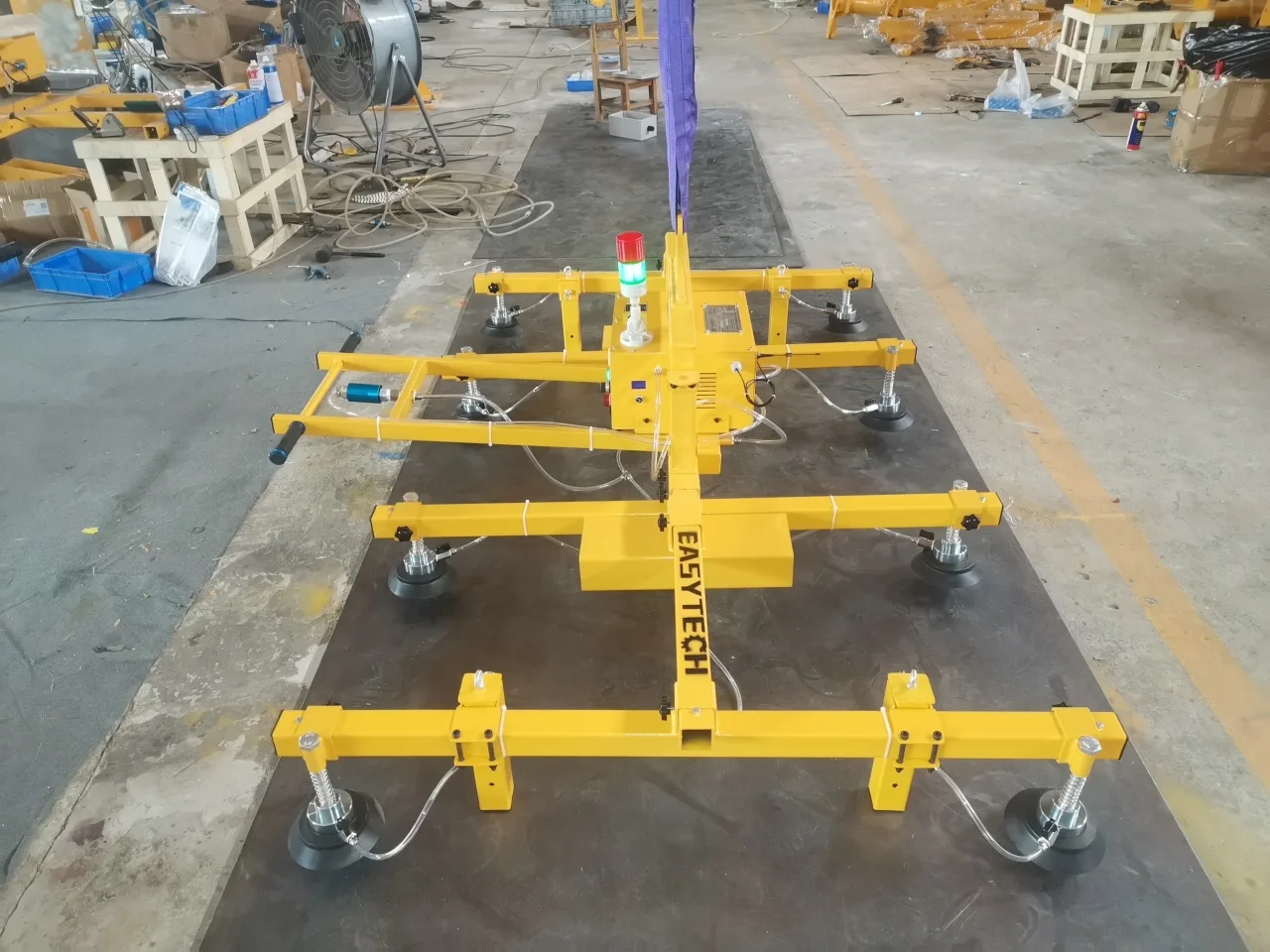
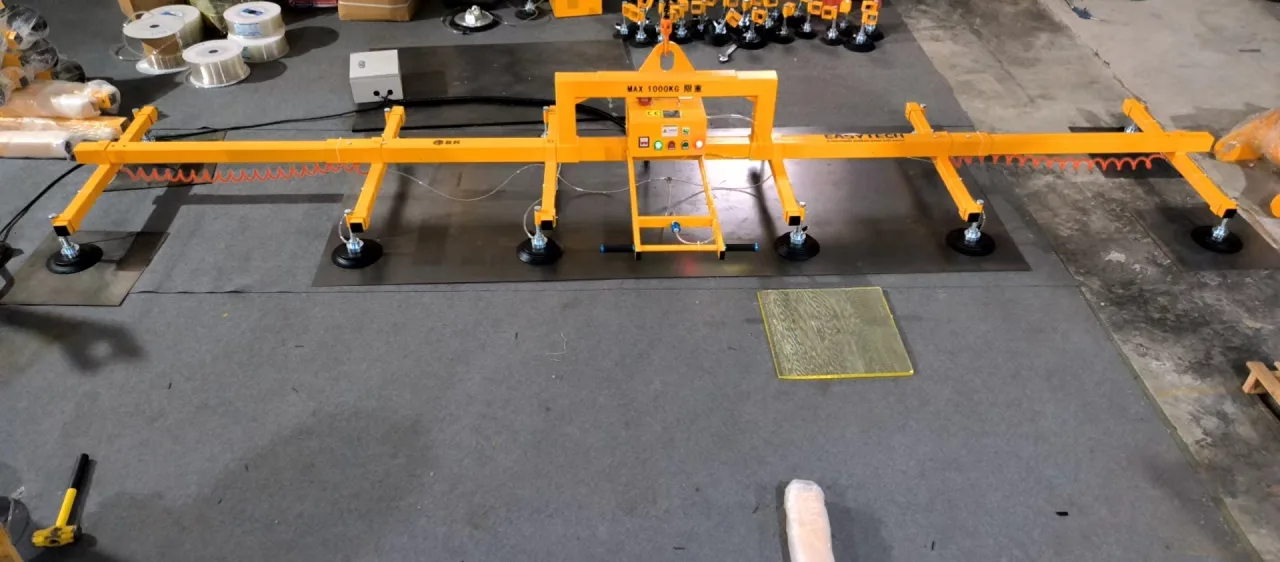
For steel and alloy sheet handling, match beam span and pad spacing to every sheet size you cut—thin flexible sheets, narrow strips and laser-table clearance matter just as much as total weight.
Start with your handling task
Compare the sheet envelope in the mains-powered range
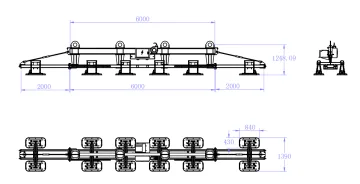
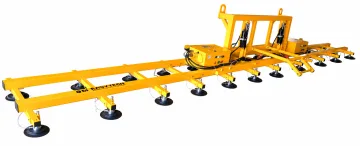
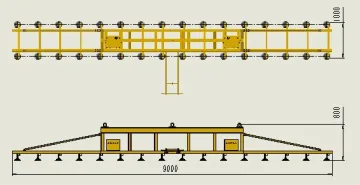
The suffix is not the workpiece size. For example, ETJS-C1000-5M lists a 4,900 × 1,360 × 820 mm equipment arrangement and a 6,000 × 2,000 mm maximum workpiece. Use the actual specification fields rather than decoding the model name.
Other formats address different constraints
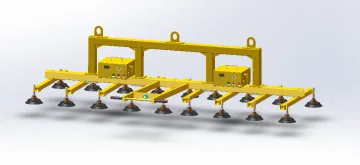
Two approved layouts for the 2,000 kg configuration
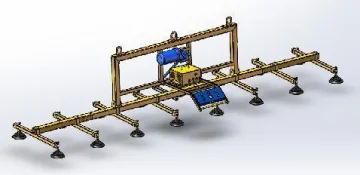
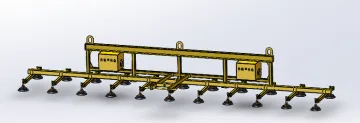
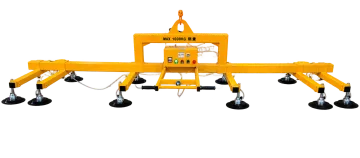
ET-SM-C2000-3M — Extended-Range Sheet Metal Vacuum Lifter — 20 × Ø200 mm or 16 × Ø250 mm pads are alternative configurations. Choose the layout that fits the sheet support requirement; do not invent an intermediate pad combination.
Select horizontal transfer and tilting separately
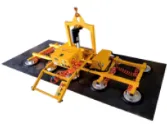
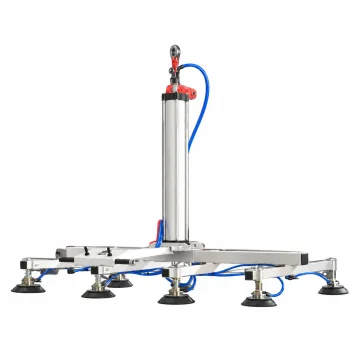
Not all rotating frames also tilt—many mains-powered lifters are designed for horizontal lifting only. If you need vertical-to-horizontal rack-to-table turning, choose a tilting model sized for the required angle and clearance.
Plan the complete sheet-loading sequence
Does a vacuum frame separate a single sheet from a stack?
Not automatically. Include separation or double-sheet detection as an explicit requirement if your process needs it.
What happens when some pads are shut off?
The permitted load and distribution need reassessment for the reduced-pad arrangement. A pad isolation valve is not an unchanged-capacity approval.
Prepare a comparable quotation
Include material, sheet size/thickness/weight range, finish or oil/film, cutouts, stack height, destination table and required motion. Add crane capacity, available utilities and any sheet-separation requirement.
Use the detailed buying guide
Send your requirements to Easytech