An upright drum transfer and a pouring operation are different equipment requirements. Identify how the drum can be gripped before choosing the lifting device. The lid, rim or handle has to transmit the load; a drum diameter and filled weight do not establish that capability.
Select the contact method first
Drum construction or task | Route to investigate | Do not assume |
|---|---|---|
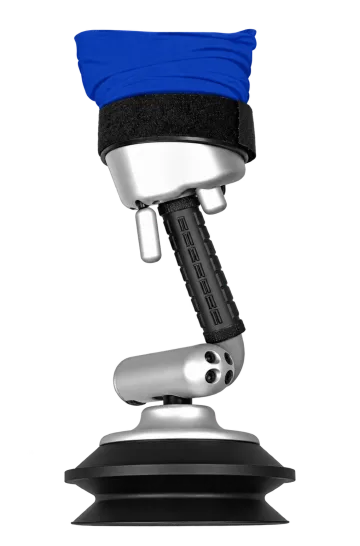
Closed drum with a suitable top face | A reviewed vacuum head and lifting system. | A loose lid or removable closure can carry the filled drum. |
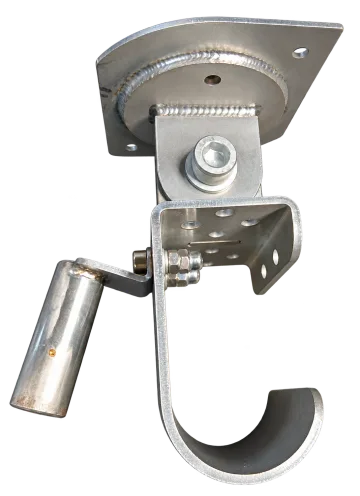
Container with a lifting handle | This hook is a rim clamp or a turning device. | |
Drum requiring body/rim engagement | A custom end tool on a suitable manipulator. | Every rim, plastic shell or coating accepts the same grip. |
Tilting to a vessel | A purpose-specified gripping and turning assembly. | An upright transfer setup includes pouring. |
Choose the supporting platform after the tool
ETJSQ-V160-60 — Vacuum Tube Lifter — 65 kg sealed-surface / 60 kg porous-surface tube-lifter values. These are not a universal drum rating; the selected drum contact and lid construction still control suitability.
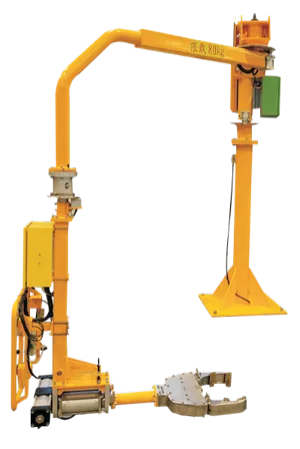
ET-MP-PN-200 — Pneumatic Rigid-Arm Manipulator — 200 kg pneumatic rigid-arm platform with a 2.5 m jib. Specify the drum tool, turning requirement and full load calculation.
The two platforms address different integration questions. The tube system needs a compatible head and seal; the rigid arm needs an identified end tool and working envelope. Neither platform listing supplies a universal drum clamp, a food-contact approval or an explosion-protection rating.
Map a pouring cycle explicitly
Record the upright pickup, clearance above the pallet, route to the receiver, discharge height and final angle. Show the receiving vessel rim and the space needed to withdraw the tool. State whether contents can move suddenly or whether the drum must remain sealed. These details affect the grip, load offset and movement assessment.
Prepare a drum schedule for the trial
Item | Why it changes the review |
|---|---|
Material and closure | Steel, plastic or fibre construction and the actual lid/rim attachment. |
Filled and empty states | The range of load and how the contents shift during movement. |
Contact limits | Surface marking, allowable clamping and the features permitted for lifting. |
Variants | Different suppliers or drum sizes that must use the same tool. |
Workstation | Reach, discharge height, surrounding guards and access to controls. |
Can ET-VC-HOOK-PAIL lift any drum?
No. Its documented use is handling drums by their lifting handle. The handle and container must be suitable for that method; it is not a general drum-lifting approval.
Can a vacuum drum lifter grip an open drum?
An open top does not provide a closed lifting face. Another approved contact or mechanical engagement may be needed. Describe the actual container and contents rather than selecting from an empty drum photograph.
Details to include in your enquiry
Requirement | Details to provide |
|---|---|
Drum | Material, diameter, height, rim/lid design, filled weight and contents movement. |
Grip | Permitted face or engagement area, contact marks and clamp restrictions. |
Motion | Upright transfer, turning or pouring; required discharge position. |
Station | Pickup/destination arrangement, reach, clearance, support and utilities. |
Choose the next step
Vacuum versus mechanical drum gripping · Roll and drum requirement checklist · Industrial manipulators