
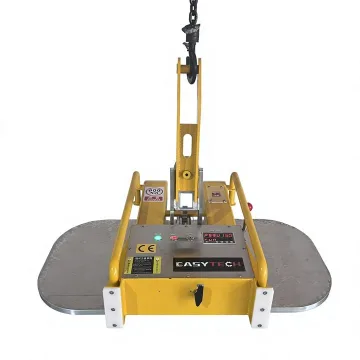
Equipment family
Glass Vacuum Lifters: Flat, Curved and Heavy-Duty Frames
Compare glass vacuum lifters by pane contact, manual or powered motion, frame layout and load. Browse flat, curved, counterbalanced and heavy-duty models.
A glass vacuum lifter provides the gripping attachment; its crane, hoist or other support must be selected for the complete assembly. Start with the pane drawing, lifting face and required movement, then compare frame formats and controls.
Start with your handling task
Compare models and configurations
Filters include documented loads and overlapping conditional ranges. A range does not guarantee its upper value for every workpiece. Check material, seal, orientation and complete configuration.
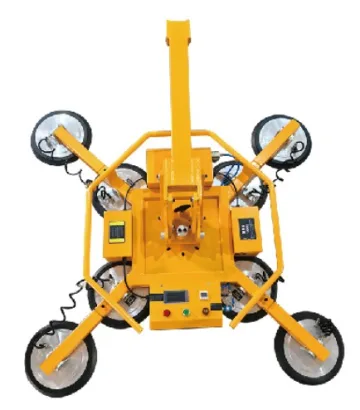
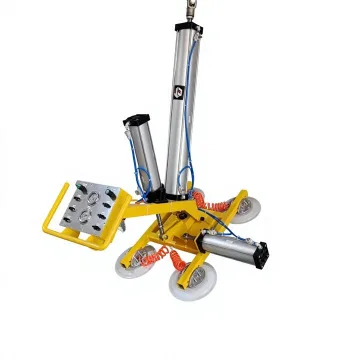
ETJS-C300-2M
ETJS-C300-2M Pneumatic Tilting & Rotating Glass Lifter
- Rated load
- 400 kg
- Drive
- Compressed air
ETJS-C600-2M
ETJS-C600-2M Pneumatic Tilting & Rotating Glass Lifter
- Rated load
- 500 kg
- Drive
- Compressed air
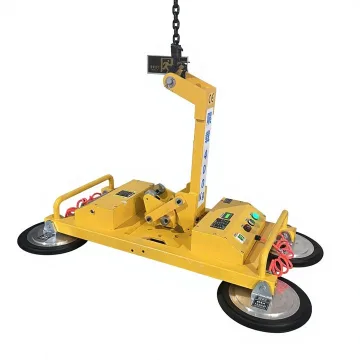
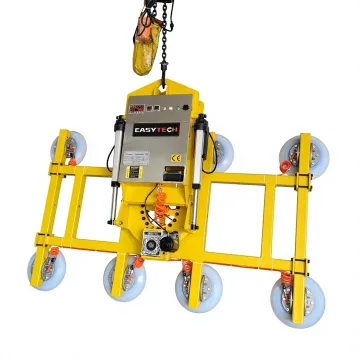
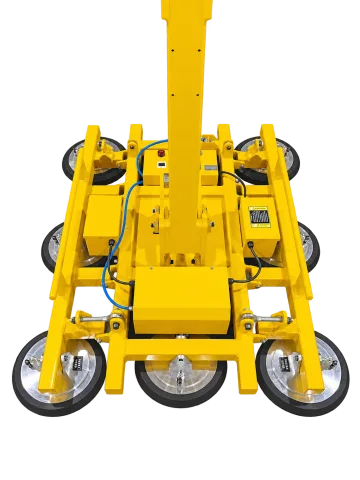
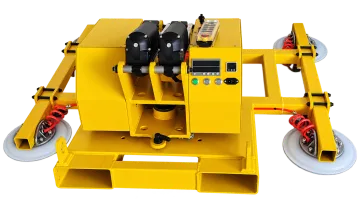
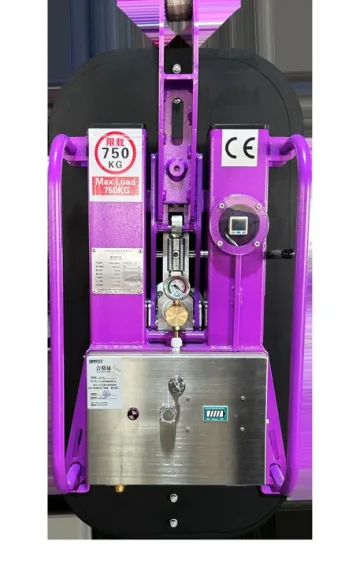
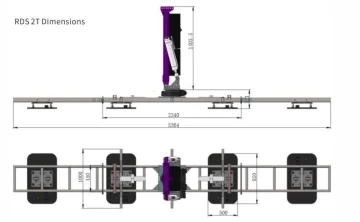
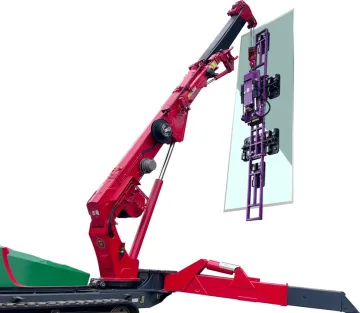
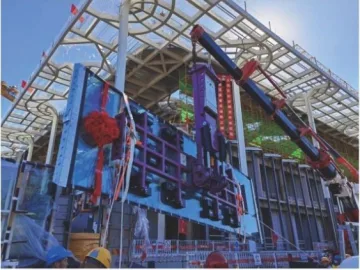

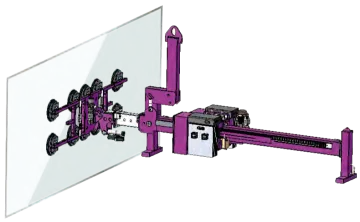
BVL 2000
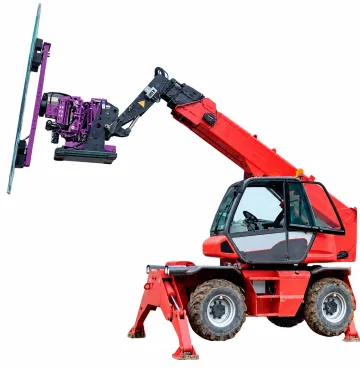
BVL 2000 Counterbalanced Glass Vacuum Lifter
- Rated load
- 2000 kg maximum; permissible load depends on reach and the load chart.
- Drive
- Electrohydraulic
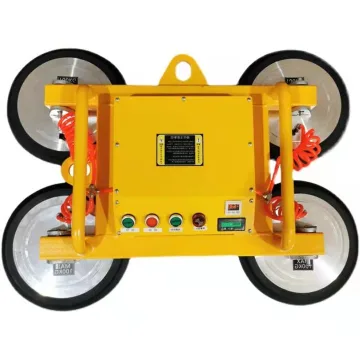
ET-GL-COMPACT-300
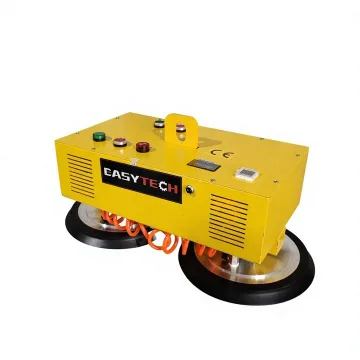
ET-GL-COMPACT-300 Compact Glass Vacuum Lifter
- Rated load
- 300 kg
- Drive
- Drive arrangement to be specified for the ordered configuration
ET-GL-COMPACT-400
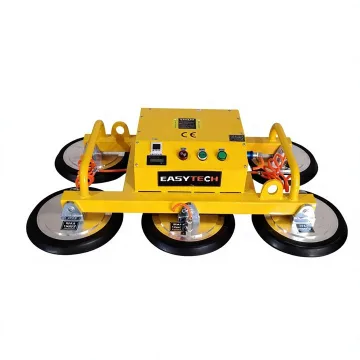
ET-GL-COMPACT-400 Compact Glass Vacuum Lifter
- Rated load
- 400 kg
- Drive
- Drive arrangement to be specified for the ordered configuration
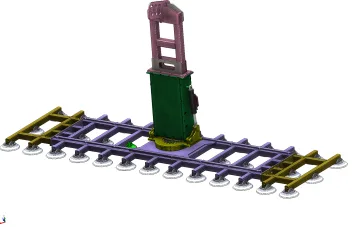
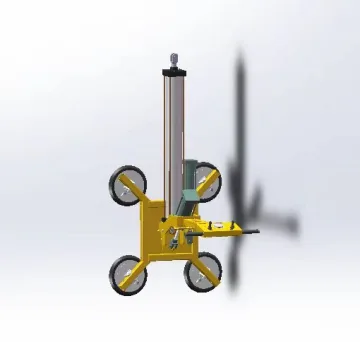
ET-GL-FLIP180-E300
ET-GL-FLIP180-E300 180° Tilting Glass Vacuum Lifter
- Rated load
- 300 kg
- Drive
- Electric actuator
ET-GL-FLIP180-P300
ET-GL-FLIP180-P300 180° Tilting Glass Vacuum Lifter
- Rated load
- 300 kg
- Drive
- Pneumatic cylinder
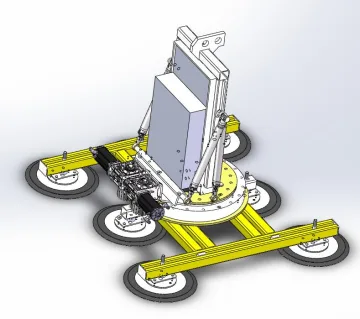
ET-GL-HYD-1500-LEG
ET-GL-HYD-1500-LEG Dual-Circuit Hydraulic Glass Vacuum Lifter
- Rated load
- 1500 kg
- Drive
- Battery / hydraulic
ET-GL-H230-300
ET-GL-H230-300 H-Frame Glass Lifter with Small-Diameter Pads
- Rated load
- 300 kg
- Drive
- Drive arrangement to be specified for the ordered configuration
ET-GL-H230-500
ET-GL-H230-500 H-Frame Glass Lifter with Small-Diameter Pads
- Rated load
- 500 kg
- Drive
- Drive arrangement to be specified for the ordered configuration
No matching configurations.
Try a shorter model name or clear the load filter.
Choose the frame format
Format | Examples | Reason to review it |
|---|---|---|
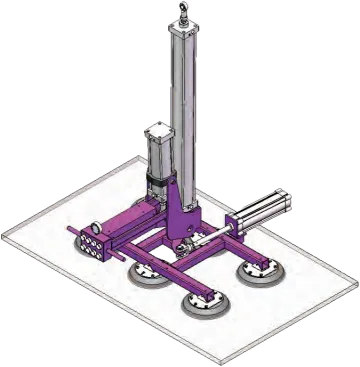
Single rectangular pad | 500 kg; 800 × 400 mm pad. Needs a suitable uninterrupted contact face. | |
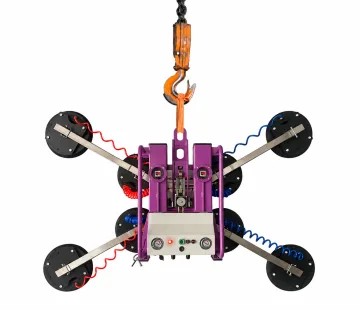
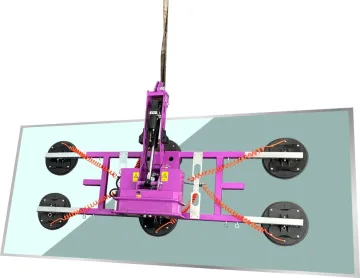
H-frame | 400 kg with four Ø300 mm pads; manual tilt and rotation. Review pane support and footprint. | |
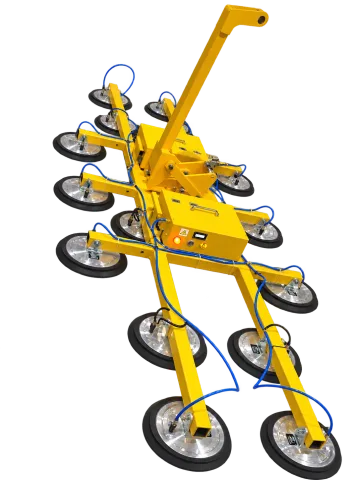
X-frame | 600 kg with six Ø300 mm pads; a different frame/pad distribution from the H-frame. | |
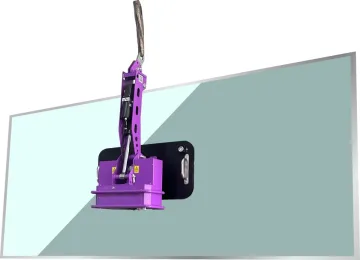
Powered tilt and rotation | 600 kg with electric 90° tilt, electric 360° rotation and dual circuits. | |
Curved-glass frame | 600 kg, eight Ø250 mm pads and stated radius ≥0.5 m; contact geometry remains decisive. | |
Counterbalanced format | Offset reach requires the applicable load chart; maximum capacity alone is insufficient. | |
Heavy-duty rectangular-pad frame | 5,000 kg standard arrangement with ten 850 × 550 mm pads; review pane and crane together. |
A powered movement is different from powered vacuum
A battery can supply a vacuum pump while tilt and rotation remain manual. ETJSB-G600B lists manual 90° tilt and 360° rotation, whereas ETJSB-G600F lists electric movement. Specify the movement you need and the access available to operate it; do not infer powered motion from the presence of a battery.
Compare circuit and option scope precisely
A twin-pump description and a dual-circuit description are not interchangeable claims. Use the vacuum-system entry for the exact model. Optional remote control is also separate from included control: Glassboy multi-pad records describe wireless control as optional, while individual ETJSF records list it among standard control accessories.
Select around the complete glass unit
- Dimensions, mass and construction of the pane, including holes, coatings and excluded contact areas.
- Available pad seating and support distribution at the required orientation.
- Frame, rigging and hook clearance at the installation opening.
- Complete suspended load and supporting-machine working position.
Review heavy-glass installation
Is pad count enough to calculate the lifting capacity?
No. The approved complete arrangement governs. Do not sum theoretical cup forces or deactivate pads while retaining the original frame rating.
Is a maximum pane size the only geometry check?
No. Thickness, stiffness, cutouts, surface and available pad positions still matter. Read any maximum size together with the specified configuration.
Prepare a comparable quotation
Send the glass schedule and contact restrictions, pickup and final orientation, required tilt/rotation, installation section and crane/hoist details. Name any required circuit arrangement, remote control or project documents.
LET’S DEFINE YOUR APPLICATION
The right equipment starts
with your workpiece.
Tell us what you lift, where it moves and how it needs to arrive.