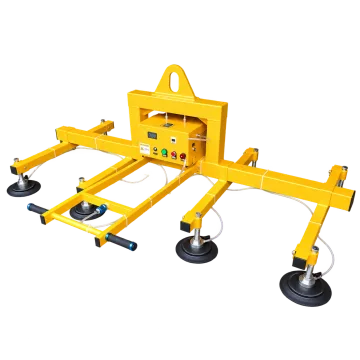
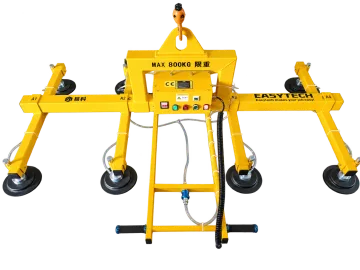
Select a sheet-metal vacuum lifter from the full sheet range and the loading movement. A thin wide sheet can demand more support than a smaller heavier plate. Start with the smallest usable pad area, largest overhang and machine approach before choosing a headline load.
The same load can have a different sheet-size envelope
Model / configuration | Rated load | Equipment dimensions (mm) | Maximum workpiece dimensions (mm) | Net equipment weight |
|---|---|---|---|---|
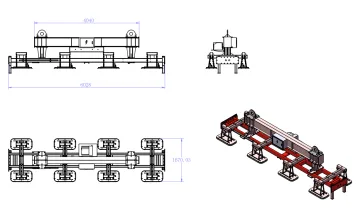
800kg | 2000*1360*820 | 3000*1500 | 94kg | |
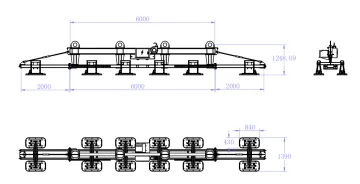
800kg | 3000*1360*820 | 4000*2000 | 101kg |
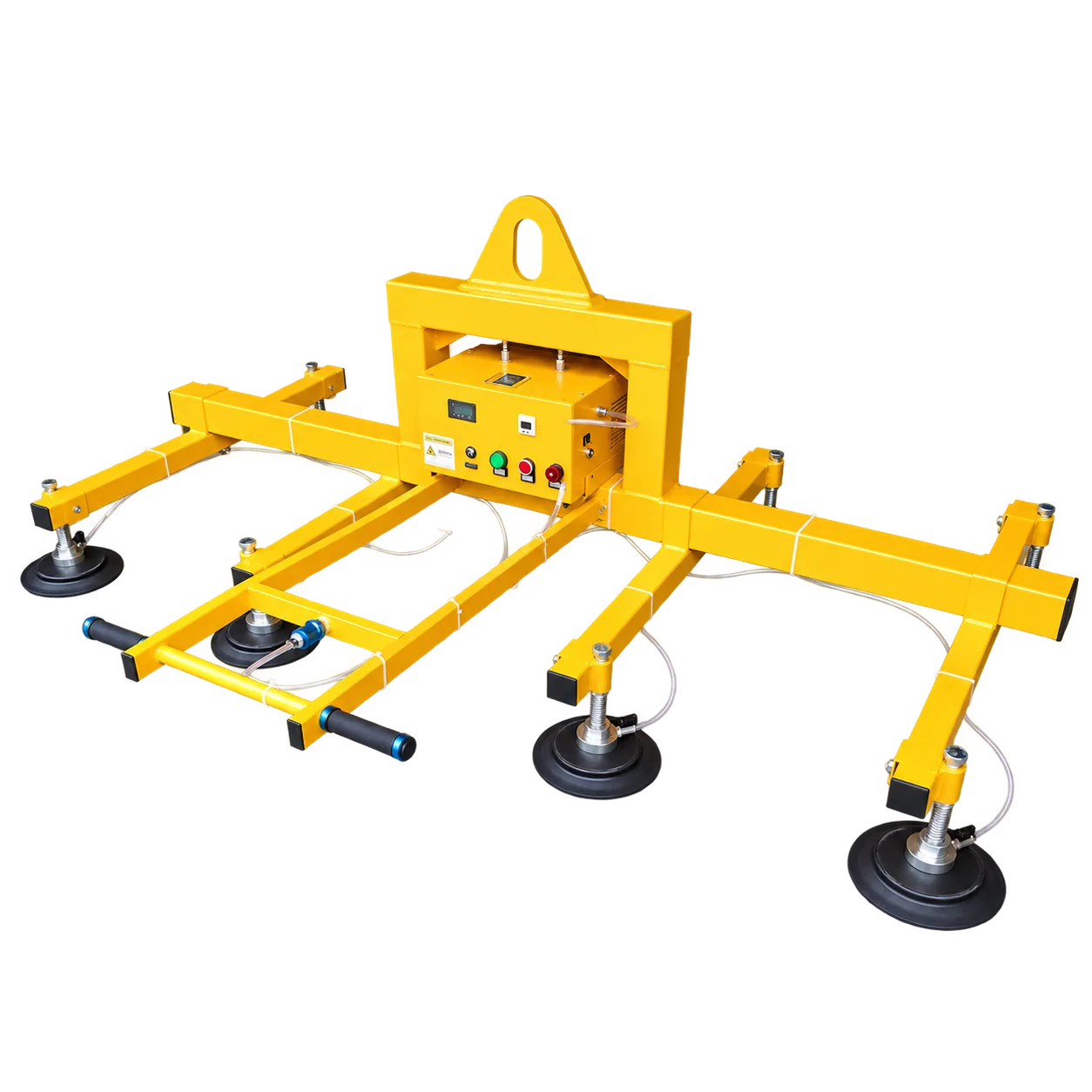
Both ETJS-C800 configurations are rated 800 kg. The 2M arrangement lists 3,000 × 1,500 mm workpieces; the 3M lists 4,000 × 2,000 mm. The longer configuration also weighs more. These published dimensions narrow the shortlist, but sheet thickness, stiffness and contact condition still need review.
Higher capacity and tilting solve different tasks
Requirement | Example | Selection implication |
|---|---|---|
2,000 kg sheet configuration | Alternative layouts are 20 × Ø200 mm or 16 × Ø250 mm. Choose an approved full layout; do not combine the alternatives into an invented arrangement. | |
A required change of orientation | 1,000 kg, ten Ø250 mm pads and electrohydraulic-cylinder tilting. Confirm the required angular range and load condition. | |
Large horizontal plate | ET-SM-HD-6000 — Heavy-Duty Horizontal Steel Plate Vacuum Lifter | 6,000 kg horizontal, 6,000 × 2,500 mm workpiece and AC480 V / 60 Hz supply, subject to the listed surface and vacuum conditions. |
Larger horizontal plate | ET-SM-HD-10000 — Heavy-Duty Horizontal Steel Plate Vacuum Lifter | 10,000 kg horizontal, 9,000–12,000 × 1,500–3,000 mm workpiece and AC380 V supply, subject to its own conditions. |
Keep the surface condition attached to the rating
The 6,000 kg and 10,000 kg heavy-plate specifications state non-porous, dry, oil-free metal at 60% vacuum. These values do not establish an oily-sheet rating for the same frame. For filmed, perforated or cut sheets, show the permitted contact zones and confirm whether the surface layer can transmit the load.
Crane selection includes more than plate mass
The 6,000 kg model weighs 750 kg and specifies a 10,000 kg-or-higher crane class subject to project installation requirements. The 10,000 kg model weighs 1,850 kg and specifies 15,000 kg or higher. Preserve these requirements; do not substitute only the arithmetic sum of plate and frame.
Define the machine-loading acceptance sequence
Step | Check for your station |
|---|---|
Separate | State whether single-sheet separation or double-sheet detection is included; vacuum gripping alone does not provide it. |
Lift | Pad contact, sheet support and the lowest stack position. |
Approach | Clearance under guards and around the moving or shuttle table. |
Place | Sheet fully supported without trapping the frame or control handle. |
Release | Accessible control and a withdrawal path clear of the machine. |
Can I close off pads for small sheets and keep the same capacity?
No. The documented sheet-lifter configurations require reassessment when pads are deactivated. Both the remaining load distribution and the revised permitted load matter.
Is a battery model suitable for every mains-powered application?
Battery operation changes the utility arrangement, not the workpiece approval. Compare the exact pad/frame layout and required motion; charging and any specified air connection still need to be resolved.
Details to include in your enquiry
Requirement | Details to provide |
|---|---|
Sheet | Material, length, width, thickness, weight and stiffness. |
Surface | Oil, coating, film, perforations, cutouts and temperature. |
Storage/destination | Stack heights, rack/table arrangement and pickup/placement access. |
System | Required tilt/rotation, frame weight, supporting crane and utilities. |
Choose the next step
Laser-machine loading guide · Sheet-metal lifters · Support-system comparison
Build the complete handling sequence
Connect stack pickup, frame support, machine clearance and release to the selected sheet format.