A reel-handling system must protect the wound material as well as carry its weight. The decisive step may be turning the reel from a pallet or aligning its core with a machine spindle. Identify that step before selecting a tube lifter or manipulator.
Choose a grip that the reel construction permits
Possible contact | Information required | Selection concern |
|---|---|---|
Inside the core | Internal diameter, usable depth, material, wall condition and allowable loading. | Core damage, slip and whether the tool obstructs the destination spindle. |
Outside diameter | Minimum/maximum diameter, product layers and allowable contact pressure. | Crushing, marking or telescoping of the wound material. |
End face | Available sealing area, permeability and the reel construction. | An apparently flat face is not automatically vacuum-tight or structurally suitable. |
Keep axis change separate from lifting
Describe pickup as core-vertical or core-horizontal and do the same for placement. If the axis changes, specify the rotation and clearance required with the largest reel. If it stays horizontal, draw the mandrel insertion path, engagement length and the space needed to release and withdraw the gripper.
Platforms to review with the proposed reel tool
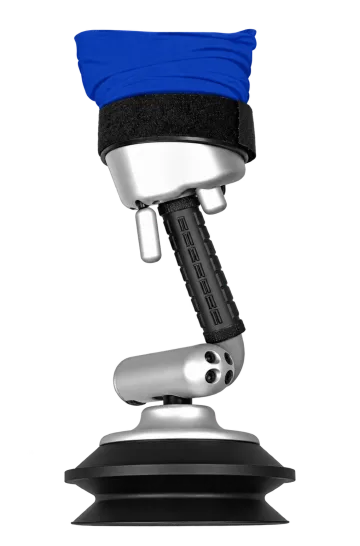
ETJSQ-V160-60 — Vacuum Tube Lifter — Tube-lifting platform with 65 kg sealed / 60 kg porous load conditions and 1,700 / 2,500 mm stroke options. It does not establish a reel gripper or powered turning specification.
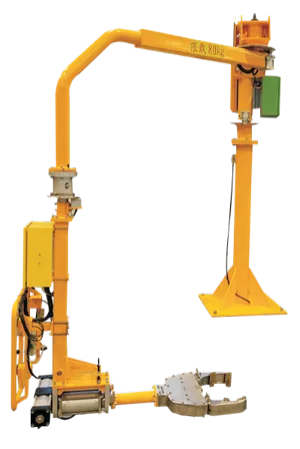
ET-MP-PN-300 — Pneumatic Rigid-Arm Manipulator — Pneumatic rigid arm, 300 kg rating and 2.5 m jib. The reel tool, its mass and any turning or insertion function must be defined separately.
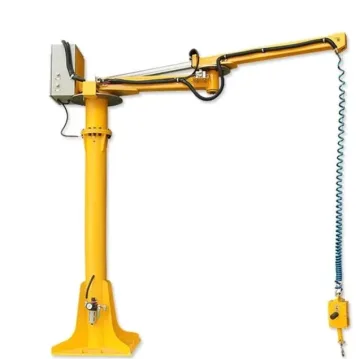
SAC-RS100 — Column-Mounted Cable Balancer — Column cable balancer, 100 kg load and 500–2,500 mm working radius. Review whether the chosen end tool provides the orientation control required at the machine.
What to measure at the winding or converting machine
Measurement | Purpose |
|---|---|
Spindle height and protrusion | Defines lifting position and insertion approach. |
Guards and neighboring stations | Reveals tool and arm interference during approach. |
Core-to-spindle clearance | Sets an alignment requirement; it is not a published device accuracy. |
Release space | Ensures the tool can withdraw after the reel is supported. |
Pallet layout | Checks the lowest reel and the deepest pickup position. |
Use the smallest core, widest reel and most delicate surface in the acceptance set, as well as the heaviest reel. One heavy demonstration does not prove that all packaging formats can be handled without damage.
Is a standard manipulator already a reel turner?
No. A manipulator is the supporting platform. Core gripping, external gripping, turning and release must be part of the specified end-tool assembly.
What if reels have damaged or variable cores?
Identify the variation in the enquiry. A core-based grip must be assessed for the actual core condition; another contact method may be needed. Do not compensate by increasing gripping force without an approved tool assessment.
Details to include in your enquiry
Requirement | Details to provide |
|---|---|
Reel | Outside diameter, width, weight, core dimensions and strength. |
Material | Wound product, surface sensitivity and allowable contact pressure. |
Orientation | Core vertical/horizontal at pickup and placement; required turning. |
Machine interface | Mandrel, spindle or receiving station dimensions and available clearance. |
Choose the next step
Roll/reel selection details · Custom manipulator scope · Manipulator range