Define the sheet range
Use a table of materials, length, width, thickness and weight for the smallest and largest sheets. Identify oil, coating, protective film, holes and temperature. Two sheets of the same weight may need different support because their size and stiffness differ.
Input | What to check |
|---|---|
Sheet dimensions and thickness | Pad positions, frame adjustment and unsupported overhang. |
Surface condition | Suitability of the contact face, sealing and handling direction. |
Stock arrangement | Access to the top sheet and the pickup position above the stack. |
Machine table and guarding | Approach, travel path, landing support and frame clearance. |
Cut or perforated material | Whether enough approved contact area remains for lifting. |
Keep pad alternatives as complete configurations
The 2,000 kg sheet-lifter configuration has two documented alternatives: 20 pads of 200 mm diameter, or 16 pads of 250 mm diameter. Select the layout for the sheet geometry and record the chosen configuration in the order. These alternatives do not authorize arbitrary pad removal or a new combined layout.
A pad count by itself does not describe the usable support pattern. Request the frame dimensions, pad spacing and adjustments for the formats you intend to lift.
Plan the loading cycle
- Show the stack and machine-table positions on a layout, including the lowest and highest workpiece levels.
- Identify whether the task needs horizontal transfer only or a documented tilting movement.
- Check the support equipment with the lifting-frame weight and workpiece included.
- Leave clearance to place the sheet fully on its support before releasing.
- Define how the operator can see and control the final approach.
Do not confuse gripping with sheet separation
A vacuum pickup does not by itself prove that only one sheet has been lifted. If double-sheet detection, separation or automatic loading is required, specify that function and request evidence for the proposed system. Do not infer it from a manual lifting-frame photograph.
For acceptance, include representative thin, large and surface-treated sheets within the agreed range. Record contact, deflection, pickup behaviour and the available machine clearance before signing off the arrangement.
Same load, different frame: a useful shortlisting example
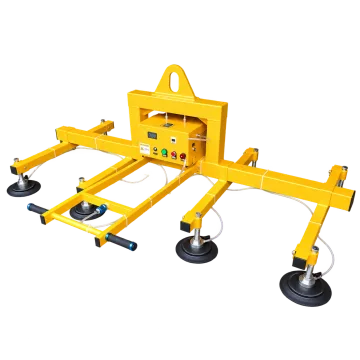
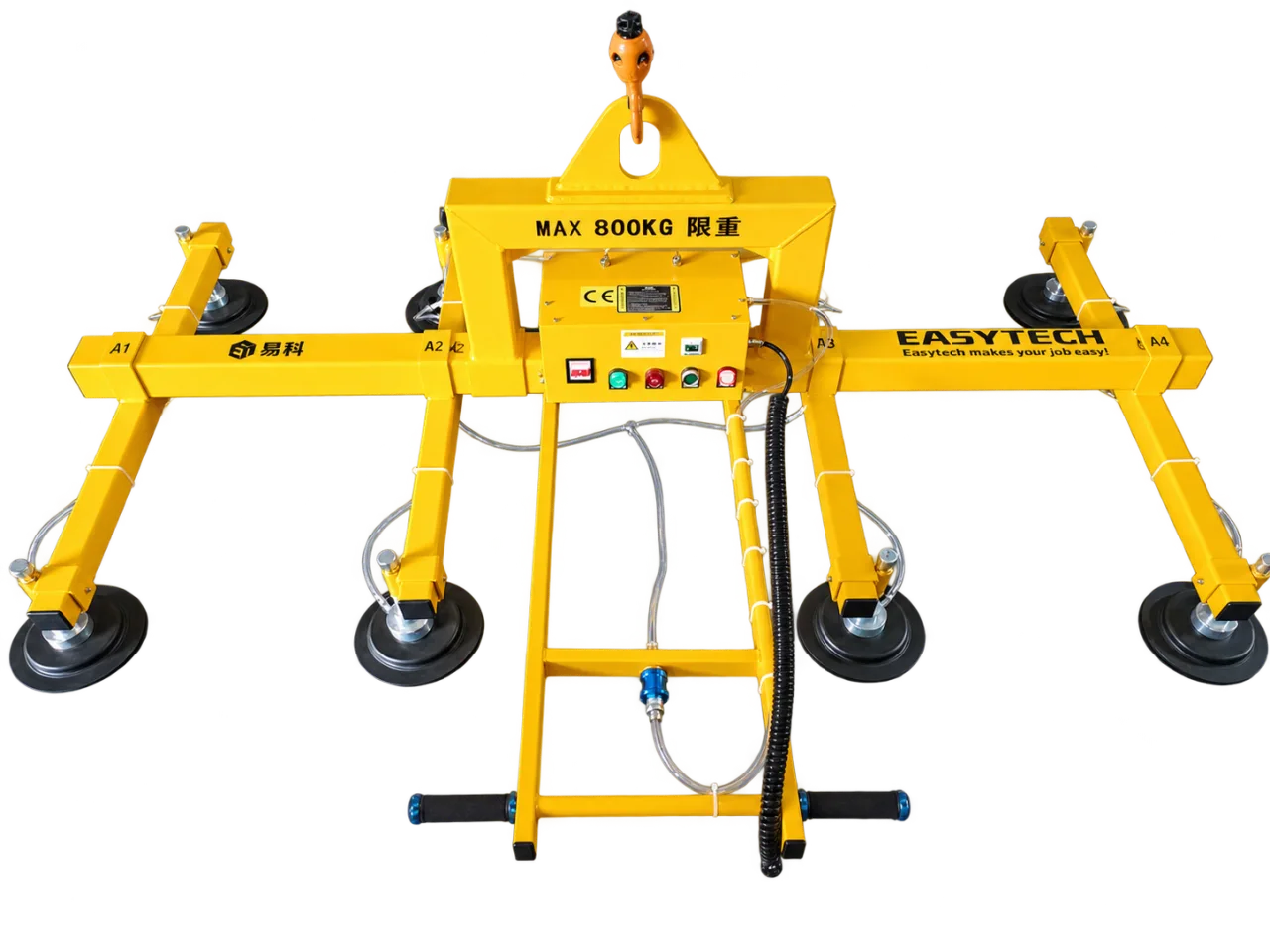
Model / configuration | Rated load | Maximum workpiece dimensions (mm) | Equipment dimensions (mm) | Net equipment weight |
|---|---|---|---|---|
800kg | 3000*1500 | 2000*1360*820 | 94kg | |
800kg | 4000*2000 | 3000*1360*820 | 101kg |
Both models list 800 kg, but only the 3M record in this comparison lists a 4,000 × 2,000 mm workpiece envelope. The 2M record lists 3,000 × 1,500 mm. This is a useful first exclusion when reviewing larger stock; it does not remove the need to assess thickness, support and surface.
Draw the receiving table in its loading state
Include a shuttle table’s actual loading position, guards and the route used to withdraw the frame. Mark where the operator will stand and see the sheet edge. A table dimension alone cannot show whether the suspension or side handle collides with the machine during placement.
Continue your equipment review
Sheet metal lifters · Sheet handling application · Crane system selection
Questions for this equipment decision
What defines the supply scope of a sheet-loading workstation?
Frame geometry, pad layout, movements, vacuum source, detection options and supporting crane equipment determine the supply scope.
How do sheet thickness, overhang and cut-outs affect vacuum lifting?
Send sheet dimensions, thickness, material and the locations of openings. Thin sheets can deflect between support points, while cut-outs may prevent a pad from sealing. The frame and pad pattern must support the actual workpiece. A rating for an intact plate does not automatically apply to perforated sheets or a laser-cut skeleton.
How should the two 2,000 kg suction-pad configurations be specified?
Specify one of the two alternative 2,000 kg arrangements: 20 suction pads of Ø200 mm, or 16 suction pads of Ø250 mm. Select the support pattern for the sheet dimensions, thickness and contact surface. These are separate configurations; they are not a combined 36-pad arrangement.
What clearances are needed when loading a laser cutting table?
Provide the stack position, cutting-table loading opening, table height, overhead obstructions and complete travel path. Include sheet dimensions, available lifting height and the required handling sequence. The lifting frame, its suspension and the workpiece all need clearance. Agree an arrangement drawing before selecting a frame only by its rated load.
How should oily sheets and double-sheet pickup be assessed?
Describe oil, protective film, surface texture and how the stacked sheets are separated. Assess the proposed pads on representative sheets. Vacuum attachment does not itself establish that only one sheet has been picked up. Identify any required separation or double-sheet detection function explicitly and confirm whether it is included in the proposed equipment.