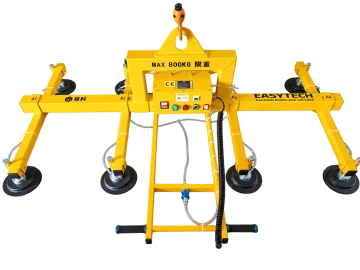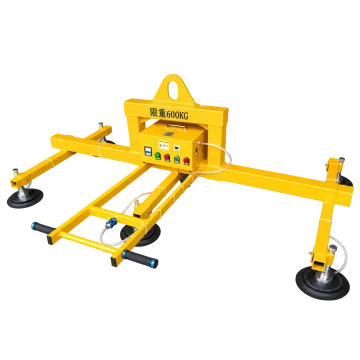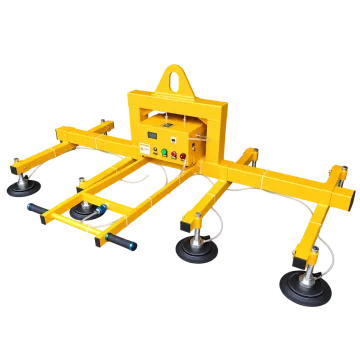
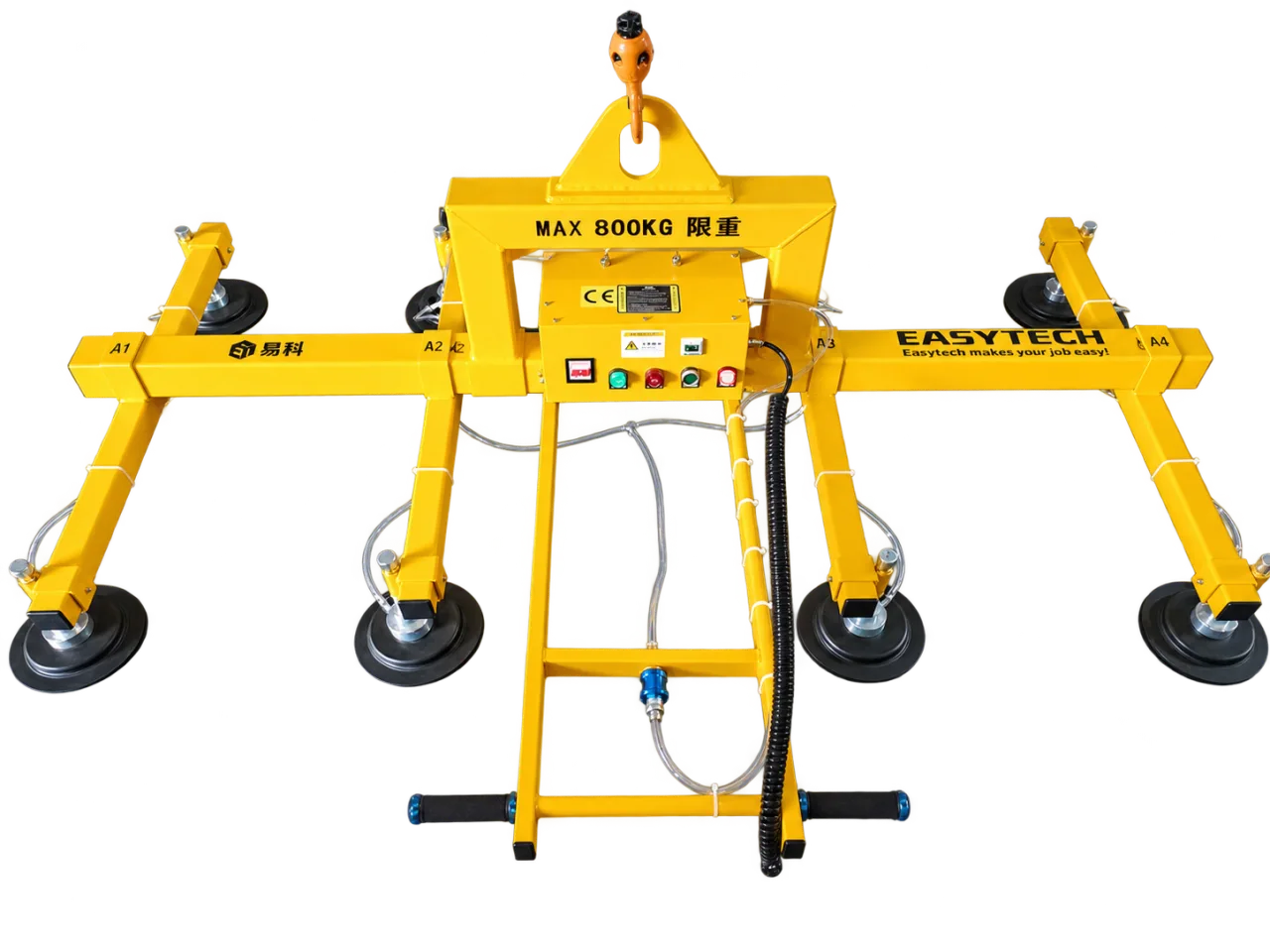
Sheet size, supply and frame mass
Choose by full sheet dimensions, pad layout and power supply (mains or battery) rather than model suffix alone—note that models with manual rotation do not automatically include tilting.
Compare similar configurations
Selection point | ET-SM-BAT-300-2M — Battery-Powered Sheet Metal Vacuum Lifter | ET-SM-BAT-300-3M — Battery-Powered Sheet Metal Vacuum Lifter | |
|---|---|---|---|
Maximum workpiece dimensions (mm) | 3000*1500 | 4000*2000 | 3000*1500 |
Equipment dimensions (mm) | 2000*1360*740 | 3000*1360*740 | 2000*1360*740 |
External mains supply | Not applicable to this configuration | Not applicable to this configuration | 220V |
Battery | 12v | 12v | Not applicable to this configuration |
Net equipment weight | 78kg | 83kg | 73kg |
Equipment and intended application
A distributed pad frame grips the sheet using vacuum and transfers its weight to the lifting point. The supporting crane lifts and transports the assembly. Horizontal, tilting and telescopic versions serve different handling sequences: the movement explicitly listed for this model defines its scope.
Workpiece compatibility
Topic | Details |
|---|---|
Sheet surface | Check the actual sheet surface for protective film, oil, rust, mill scale or perforations—every active suction pad needs a clean, flat sealing area to maintain full grip on production sheets. |
Sheet dimensions and stiffness | Match pad spread and beam length to sheet length, width, thickness and sag. A sheet may be below the mass limit yet too flexible for the proposed support positions. |
Single-sheet handling | Make sure the top sheet separates cleanly from the stack before lifting, especially with thin or oiled sheets that can stick together and exceed the rated load. |
Power supply and configuration
Topic | Details |
|---|---|
Frame layout | The table describes beam, pad and dimensional information for the selected configuration. Adjustable supports must be locked; an extended beam is not permission to exceed the approved sheet size or load. |
Vacuum source | Battery pumps, mains pumps and compressed-air vacuum generators are different versions. A pneumatic vacuum generator needs compressed air; a mains pump requires its specified electrical supply. |
Tilting | Where tilting is listed, identify its drive and angular range separately from the vacuum control. A horizontal-only frame must not be used for vertical lifting based on its horizontal rating. |
Crane interface | The crane, hook and rigging are a separate part of the installation unless explicitly included. Their permissible load must account for the entire suspended assembly. |
Installation and commissioning
- Check the crane capacity, hook height, machine loading opening and travel route using the workpiece plus lifter envelope.
- Place the frame symmetrically about the load centre of gravity. Set and lock crossbeams/pad mounts, and connect all pads required for the stated layout.
- Keep vacuum lines clear of sharp sheet edges and moving machine parts. Provide and verify the specified electrical or compressed-air supply.
- Commission the installed configuration with representative sheets, including the least stiff and most difficult sealing surface in the planned range.
Handling sequence
- Inspect the frame, suspension point, pad seals, hoses and controls; establish the sheet mass and approved layout.
- Position the pads on the sheet and apply vacuum. Check the fitted vacuum indication and warning system before taking the weight.
- Raise in a controlled manner, check that the correct load has separated and guide the sheet clear of obstructions. Use tilt only when the configuration is rated for that orientation.
- Place the sheet on stable supports or the machine table, transfer its weight fully, and then release the vacuum.
Inspection, maintenance and replacement parts
Topic | Details |
|---|---|
Each working period | Inspect pad lips, hoses, beam clamps and the suspension point. Check that the controls return correctly and fitted alarms function. |
Contamination control | Keep coolant, metal chips and oil out of the vacuum path. Service the filter using the instructions for its element; investigate recurring contamination at the workpiece. |
Wear parts | Identify pads by diameter/profile/material and connection, and hoses by size and service. Keep replacement parts appropriate to the actual machine and sheet finish. |
After reconfiguration | Check locked beam positions, connected pad count and vacuum tightness. Reassess permissible loading before lifting with a reduced pad arrangement. |
Troubleshooting priorities
Topic | Details |
|---|---|
Sheet bends excessively | Set it down and reassess thickness, overhang and support positions. Adding vacuum does not correct an unsuitable mechanical support pattern. |
Grip weakens during transfer | Set down safely and check surface condition, leaks, power and pad contact. Do not continue because the load was secure at initial pickup. |
Pump runs unusually often | Inspect the seals, hoses and valves for leakage and check the filter. A pressure-switch adjustment should not be used to conceal a leak. |
Frequently asked questions
What load should I use when selecting ET-SM-BAT-300-2M?
ET-SM-BAT-300-2M is rated for 300 kg in its standard configuration. Actual working capacity depends on workpiece size, surface, orientation and any attached tooling; on boom or telescopic models, check the load chart for your exact reach and height.
Can the same machine lift different sheet sizes?
An adjustable frame can cover the configurations approved for it. Pad spread, overhang, sheet stiffness and connected pad count must be checked for each size.
Can I turn off unused pads?
Only using an approved reduced-pad configuration with its corresponding lower load rating—never estimate capacity simply by dividing by the number of pads.
Can it handle an oily sheet?
With oily sheets, the key choices are pad material, lifting orientation and filtration. Oil reduces friction and can enter the vacuum circuit. Tell us about the sheet finish and whether you need horizontal lifting or tilting so we can recommend a suitable setup.