Identify the host machine and connection
Provide the forklift make, model, capacity information and existing attachment arrangement. Record fork dimensions and spacing or the carriage interface, as applicable. Show how the proposed attachment is retained and how utilities or controls will connect.
Information | Why it belongs in the review |
|---|---|
Attachment weight and geometry | The host machine must handle the attachment as well as the workpiece. |
Load centre and reach | Moving the load forward changes the complete handling arrangement. |
Fork/carriage connection | The exact mechanical interface and retention need to match. |
Lift height and travel route | Clearances and operating positions affect the usable arrangement. |
Workpiece orientation | Horizontal sheets, vertical glass and tilting tasks require different configurations. |
Keep the ratings separate
Check the lifting head rating, attachment limits and the forklift’s permitted capacity for the approved combination. Do not subtract attachment weight from the forklift nameplate capacity and assume the result is a valid rating: geometry and operating position also matter.
The installed combination needs the host-machine and attachment review appropriate to that configuration. A successful stationary suction demonstration alone does not establish travel or elevated handling capability.
Match the head to the workpiece
Provide dimensions, weight, surface, stiffness and accessible pad locations. For sheet material, show overhang and obstructions at the pickup and destination. For glass, identify required orientation and any tilt or rotation. Request a written distinction between powered vacuum generation and powered positioning; they are separate functions.
Prepare the acceptance sequence
- Verify the supplied connection and retention against the agreed interface drawing.
- Confirm the approved load and operating positions for the full assembly.
- Demonstrate gripping, travel/positioning as permitted, placement and release with representative loads.
- Receive the configuration-specific instructions and inspection requirements.
- Keep attachment identification with the host-machine record.
One model code can identify two unrelated formats
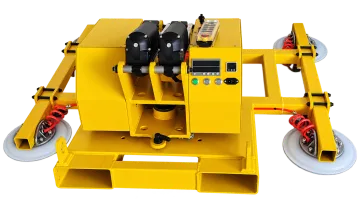
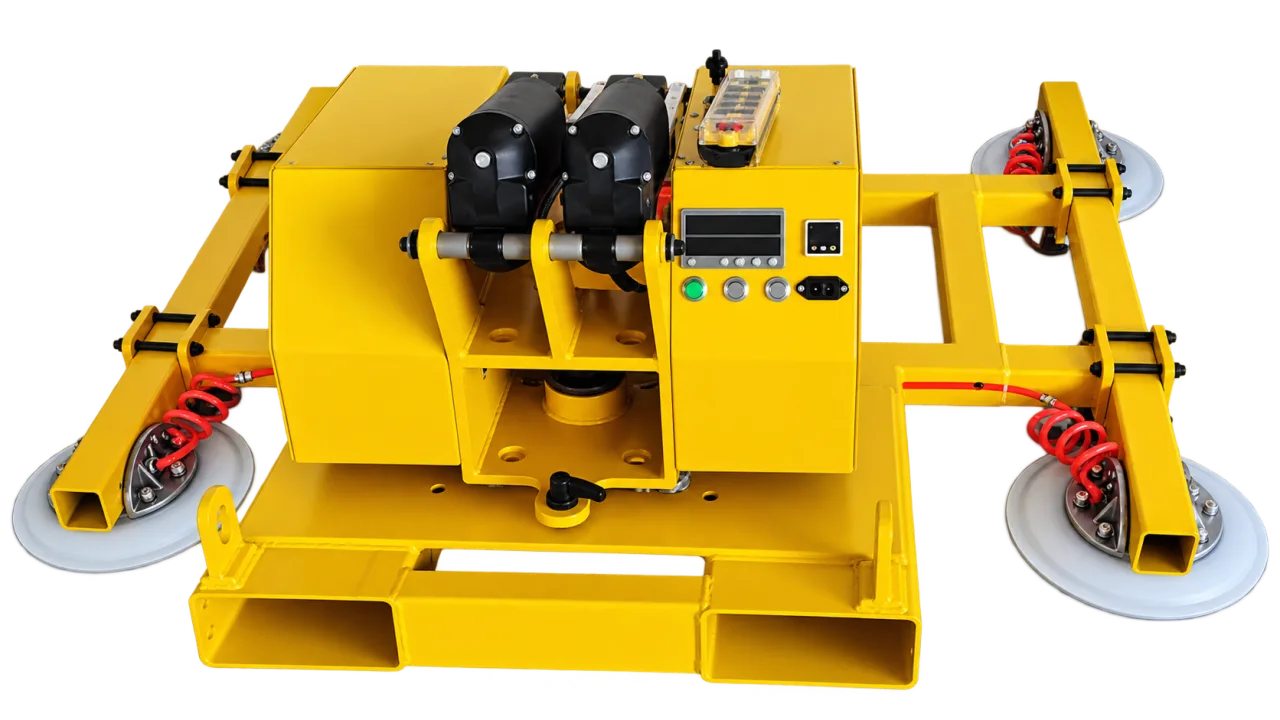
ETJSQ-V160-60 — Forklift Glass Tilting Attachment — ETJSQ-V160-60 forklift glass attachment: 600 kg, six Ø300 mm pads, electric 90° tilt and manual 360° rotation.
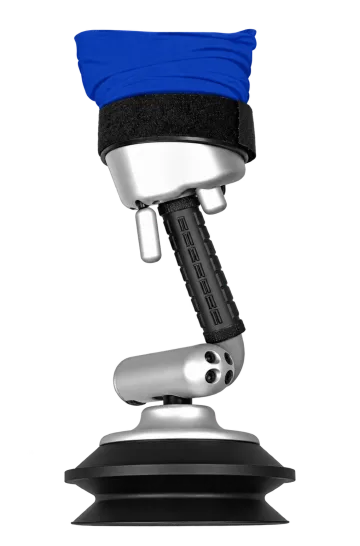
ETJSQ-V160-60 — Vacuum Tube Lifter — ETJSQ-V160-60 tube lifter: 65 kg sealed / 60 kg porous-surface load conditions. It is a different product and connection.
Use the full product description and the interface drawing in the enquiry. Model text alone cannot establish a compatible host or interchangeable equipment.
Residual capacity: information, not a shortcut formula
Ask for the host’s approved load assessment for the attachment, workpiece centre of gravity and required lift position. Even when attachment mass is known, subtracting it from a truck’s headline rating omits the forward offset. Record the final permitted combination with both equipment identities.
Continue your equipment review
Forklift lifting attachments · Sheet metal handling · Equipment documentation
Questions for this equipment decision
Which parts of a forklift attachment need to be specified for a quotation?
Host interface, pad frame, rotation or tilt, controls and the required documentation form the quotation scope.
How is forklift residual capacity assessed with a vacuum attachment?
Provide the forklift model, manufacturer load information, attachment mass and centre of gravity, and workpiece mass and centre of gravity. The attachment changes the effective load centre and may alter the permissible capacity. Use the approved combined arrangement; subtracting attachment weight from the forklift nameplate rating is not a residual-capacity assessment.
Which fork dimensions and retention details are needed before ordering?
Measure fork cross-section, length and spacing. Supply photographs or drawings of the carriage and proposed attachment interface, including retention and locking details. State the available electrical, hydraulic or other utilities. The installation drawing needs to match both the host machine and the attachment.
Can one vacuum attachment be used on both a forklift and a telehandler?
Compatibility must be assessed for each host machine. Forklift and telehandler load charts, attachment interfaces, controls and approval conditions differ. An identical suction frame does not establish a permitted combination. Provide both host models and intended working positions when asking about interchangeability.
What should an attachment acceptance test and handover record contain?
Identify the host machine, attachment, workpiece and approved configuration in the acceptance record. Agree the permitted positions, inspection and demonstration scope, operating documents and support information. A test with another host does not establish acceptance of the proposed combination.