
A hot housing is an observation, not a complete diagnosis
When a vacuum tube lifter becomes weak, its vacuum source feels hot or the motor stops, record those as separate symptoms. Heat alone does not identify the fault. A protective trip does not prove that the filter is blocked, and a loss of grip does not prove that the motor has overheated. The useful starting point is the source identity, the air path and the sequence of events.
This article concerns the blower and filtration side of a vacuum tube lifting system. Some equipment uses a different vacuum-source design; identify the installed unit from its label and instructions before applying blower guidance. For pickup, hover and travel faults, use the separate tube-lifter diagnostic guide.
If the machine stops, grip deteriorates or movement becomes uncontrolled, follow the delivered procedure to secure the load and take the equipment out of service. Do not repeatedly reset a protective device, remove a filter to continue production or run a deliberately blocked inlet as a temperature test. Do not use touch as a temperature measurement.
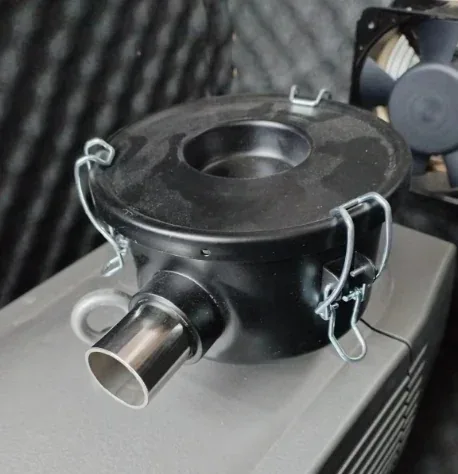
Map the air path before naming a component as the cause
For the illustrated tube-lifter arrangement, air travels from the lifting side through the connected suction line and filter toward the vacuum source, then through the source outlet. Cooling air around the motor and blower is a separate path. A clear cooling space does not prove that the process-air line is unrestricted, and a clean filter does not prove that the cooling path is clear.
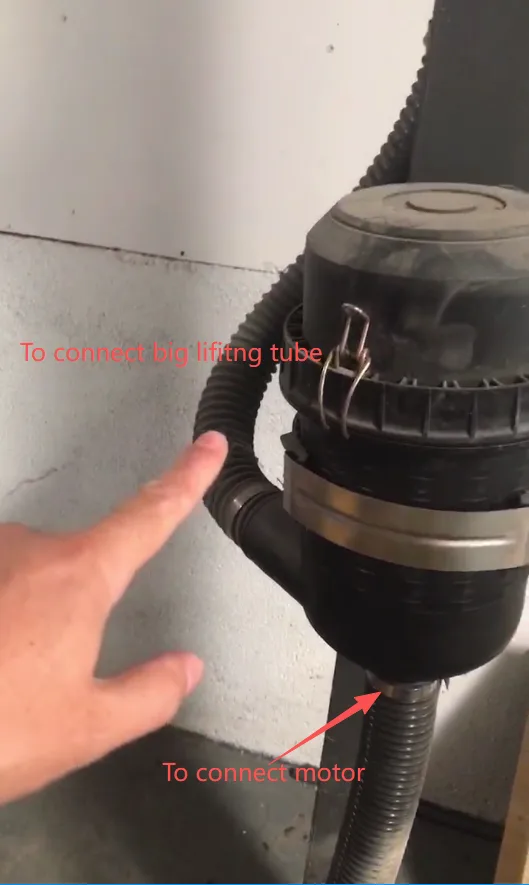
Part of the review | What the service record should identify |
|---|---|
Lifting side and hose | Head/tube configuration, hose route, recently disturbed connections, visible damage or tight bends. |
Inlet filter | Housing and element identity, service date, replacement part, sealing and reassembly record. |
Vacuum source and outlet | Source/motor labels, inlet and outlet arrangement, nearby obstructions and reported noise or trips. |
Cooling surroundings | Enclosure, nearby stored materials, changes to ventilation and any recorded ambient conditions. |
The Easytech blower instructions require free cooling-air circulation, an unobstructed installation and connections that do not strain the blower. They also warn against reducing connected pipe size below the source connections. These points justify checking an altered installation; they do not provide a universal clearance dimension or a permission to modify pipework without reviewing the system.
Distinguish three symptom patterns
1. The unit is hot but has not stopped
Record which part is involved: motor, blower casing, exhaust area or another component. If an existing approved measurement is available, record the reading, unit, location, method, operating duration and ambient condition. Compare it with the instruction for that exact source. A number from another blower or an old handbook cannot establish this unit’s permissible temperature.
Review whether the enclosure, storage around the source, cooling path, process-air path or duty changed. Do not conclude “normal” from the absence of an alarm, or “overheated” from a photograph.
2. A protective device trips or the motor stops
Record the actual indication and the time from startup to the stop. Distinguish a visible protection indication from an unexplained loss of power. Note whether the first event followed relocation, electrical work, filter service or a change in the handling task.
A qualified technician must identify the protective device and assess the supply, motor/source combination and installed operating conditions. Voltage and frequency must match the applicable nameplate and connection arrangement. A generic “dual-voltage” statement is not a wiring instruction, and this guide provides no phase-swapping or pulley-change procedure.
3. Pickup or lifting performance falls
Record whether the change affects the same previously approved package or only a new format. Include the contact face, head, hose and filter history. A restriction, a leakage path or a changed package can affect lifting performance, so the symptom must be connected to the actual configuration rather than attributed to heat alone.
If the problem is at the workpiece contact, continue with vacuum-lifter suction-loss diagnosis. If the tube does not rise or hold its position, use the tube-lifter guide. Avoid changing the source to compensate for an unapproved load or head.
First installation and a previously working installation need different questions
First use, relocation or electrical work
Compare the actual installation with the delivered arrangement: correct source and motor, nameplate supply, connected pipework, outlet location, cooling space and completed commissioning. Ask what has been verified and by whom. Do not treat “it runs” as evidence that direction, protection and operating conditions have all been checked.
Immediately after filter or hose service
Record the exact replacement element and the assembly work performed. Check the maintenance record for sealing parts, cover closure and restored hose connections. A filter that looks similar may have a different specification; outside dimensions alone do not prove equivalence. The timing makes the service work an early review item, not a proven cause.
After a period of normal use
Compare contamination, accumulated maintenance history, visible line condition and changes to the surroundings or workpiece. An unchanged equipment model does not mean the air path and operating environment are unchanged.
Only with a new bag, carton or production task
Record the new packaging and the complete handling sequence. The head, lifting unit, vacuum source and filtration must be suitable as a system. Use the bag and carton trial method to distinguish a changed application from deterioration on the previously accepted task.
Filter maintenance begins with identification
Before selecting a cleaning method, identify the element, its material/part number and the applicable maintenance instruction. The older Easytech tube-lifter manual describes particular main-filter elements that must not be washed or brushed. That restriction should not be converted into a claim that every industrial filter has the same cleaning method, or that an unidentified element can safely be blown clean.
Record whether the correct element was cleaned, replaced or found damaged, and how the housing and seals were reassembled. Cleaning and opening the system require the prescribed shutdown, isolation and prevention of unintended restart. Follow the applicable instructions for contamination handling; a maintenance article cannot qualify an installation for hazardous dust or explosive atmospheres.
Do not operate without the required element. A filter removed for service is not an acceptable production configuration. The blower documentation prohibits solids and liquids entering the source. A broken package or evidence of downstream contamination calls for assessment of the affected system, not simply fitting a fresh element and assuming the event is resolved.
Why pressure, airflow and temperature must stay in context
A source’s maximum vacuum and maximum airflow are not normally the same operating point. Neither figure, alone, establishes how the installed head, tube, hoses and filter behave. A restriction and a leak are also different faults; “more vacuum” is not a universal target for either one.
Likewise, a temperature limit belongs to a defined source, measurement location and operating condition. This guide intentionally does not publish one temperature threshold or blocked-port running time for all tube lifters. Use the source documentation and the approved service measurements. See vacuum source and surface selection for the pressure/flow distinction.
Record the evidence before the next service decision
Download the blower and filter service record. It includes source and motor identity, filter identity, event timing, existing indications, environmental changes and service closure. Leave an unavailable reading blank or mark it unknown; do not substitute a guessed temperature, current or pressure.
A useful closure records the confirmed cause, corrective work, fitted parts and the prescribed checks under the approved configuration before return to service. If cleaning restores movement but the reason for repeated contamination remains unresolved, the record should say so.
Common questions
Can a blocked filter be diagnosed from a hot motor?
No. Heat is not specific to the filter. The filter, line condition, source installation, electrical supply and operating conditions need a structured review appropriate to the installed equipment.
Should the blower be replaced with a larger one?
Not without a system assessment. A larger source does not correct an unsuitable head, damaged packaging, incorrect connections or an unapproved operating condition. Confirm the actual cause before selecting a replacement.
Is every tube-lifter vacuum source a regenerative blower?
No. Use the manufacturer’s identification for the fitted source. A search term is not a component specification.
Technical basis and further reading
The air-path, installation and filter guidance is based on Easytech tube-lifter operating documentation. Its component-specific instructions are separated from general observation and recordkeeping. The photographs show actual components and connections, not a verified overheating incident. No measured customer temperature or failure rate is claimed.