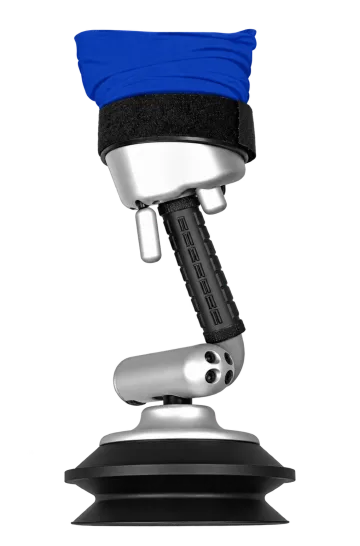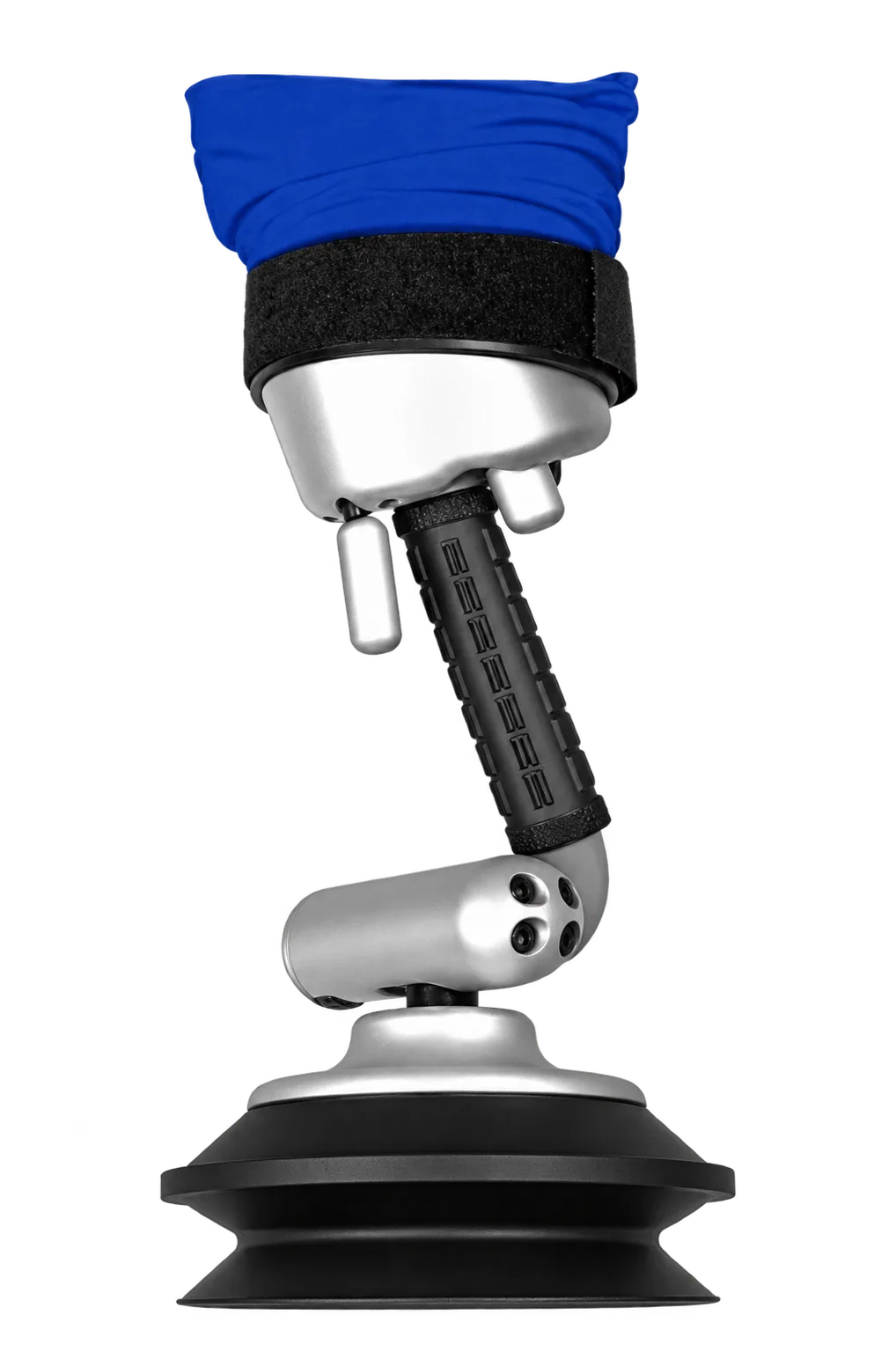
Test the packaging you will actually handle
Provide filled bags and cartons in their normal production condition. Describe seams, perforations, tape, labels, folds and any soft or deformable surface. A material name alone does not show whether a head will seal or whether the package will retain its shape.
Package | What the selection trial must resolve |
|---|---|
Paper sack | Permeability, wrinkles, seam location and usable pickup area. |
Woven or perforated bag | Leakage and the head/source combination on a filled sample. |
Plastic bag | Loose film, folds and deformation under contact. |
Carton | Lid/flap integrity, tape joints, face size and panel stiffness. |
Mixed packages | Which formats share a validated head and which need a different approved setup. |
Measure the usable motion at the handle and load
Record the lowest pickup, highest placement, reach from the support, available headroom and operator position. Tube length is not the same as usable lifting stroke. The head, handle and supporting structure take space and affect how the operator reaches the load.
For deep pallets, high stacks or a restricted conveyor, show the most difficult pickup and delivery positions. A cycle filmed at waist height does not prove that the arrangement can reach the bottom of a pallet or the top of the intended stack.
Compare the included components
Component | Quotation detail |
|---|---|
Lifting head | Package formats and approved contact arrangement. |
Handle and lifting unit | Control style, usable movement and operator access. |
Vacuum source | Required supply and location; filtration and connecting hose. |
Support | Jib or rail coverage, mounting, installation and utilities. |
Format changes | Approved heads/couplings and any changed limits. |
Handover | Sample set, configuration record and operating instructions. |
Evaluate the full repeated task
Use representative package weights and pickup heights. Include grip, travel, placement, release and return, with the operator positioned as intended. State your desired throughput as a project requirement; do not use an unrelated demonstration to claim a guaranteed cycles-per-hour value.
Compare price only after the head, source, support and installation responsibilities are aligned. A lifting-unit price and a complete installed-station price are different scopes.
Screen the package against the correct load column
Model / configuration | Load on sealed surfaces | Load on loose / porous surfaces | Lifting stroke |
|---|---|---|---|
50 kg | 45 kg | 1700 / 2500 mm | |
65 kg | 60 kg | 1700 / 2500 mm | |
250 kg | 200 kg | 1650 mm |
A hypothetical 50 kg porous sack exceeds ETJSQ-V140-50’s published 45 kg porous-surface figure even though its sealed figure is 50 kg. ETJSQ-V160-60 provides a higher published porous value, but the actual sack and head still need review. Conversely, ETJSV300-250 offers more load but a shorter stated stroke. These comparisons help exclude mismatches before a trial.
Count the whole repeated cycle
Stage | Record during an agreed trial |
|---|---|
Contact | Time to obtain the prescribed grip on the actual filled package. |
Transfer | Travel to the destination, including restricted approach. |
Place / release | Supported placement and accessible release. |
Return / change | Return movement and any head or package-format change. |
Use measured trial inputs when estimating throughput. Do not divide an hour by an unloaded lifting-speed figure and call the result a production rate.
Continue your equipment review
Bag handling · Box and carton handling · Tube lifter configurations
Questions for this equipment decision
Which system elements define a vacuum tube lifter quotation?
The head, lifting tube, vacuum supply, support structure, controls and installation interfaces determine the quotation.
How should paper, plastic and woven sacks be tested for vacuum lifting?
Test representative paper, plastic and woven sacks separately. Record bag material, sealing, perforations, dust, fill level, weight and the available gripping face. Agree the pickup and release positions and repeat the intended handling cycle with the proposed suction head. Record grip stability and observed cycle time; bag weight alone cannot establish suitability.
How much headroom does a vacuum tube lifting workstation need?
Measure the lowest overhead obstruction and both pickup and placement heights. The suspension, lifting tube, suction head and load all occupy space. Nominal tube length is not the same as usable vertical travel. Review an arrangement drawing showing the highest and lowest working positions, including any low-headroom configuration.
What should operators check when a tube lifter raises too slowly or drops unexpectedly?
If movement is unexpected or the load cannot be controlled, stop using the equipment and follow its instructions to make the situation safe. Record the model, workpiece, vacuum indication, supply condition and observed symptom. Filters, hoses, seals, material porosity and the vacuum source need model-specific investigation. Do not bypass protective devices or remove a filter to continue working.
How should a bag lifting trial be specified before purchase?
Agree a trial list covering the actual bag types, minimum and maximum weights, fill conditions and gripping positions. Include pickup height, placement height, travel route and the intended continuous duty. Record the supplied configuration, observations and agreed acceptance criteria. A trial on one sealed bag does not establish performance for every porous sack.