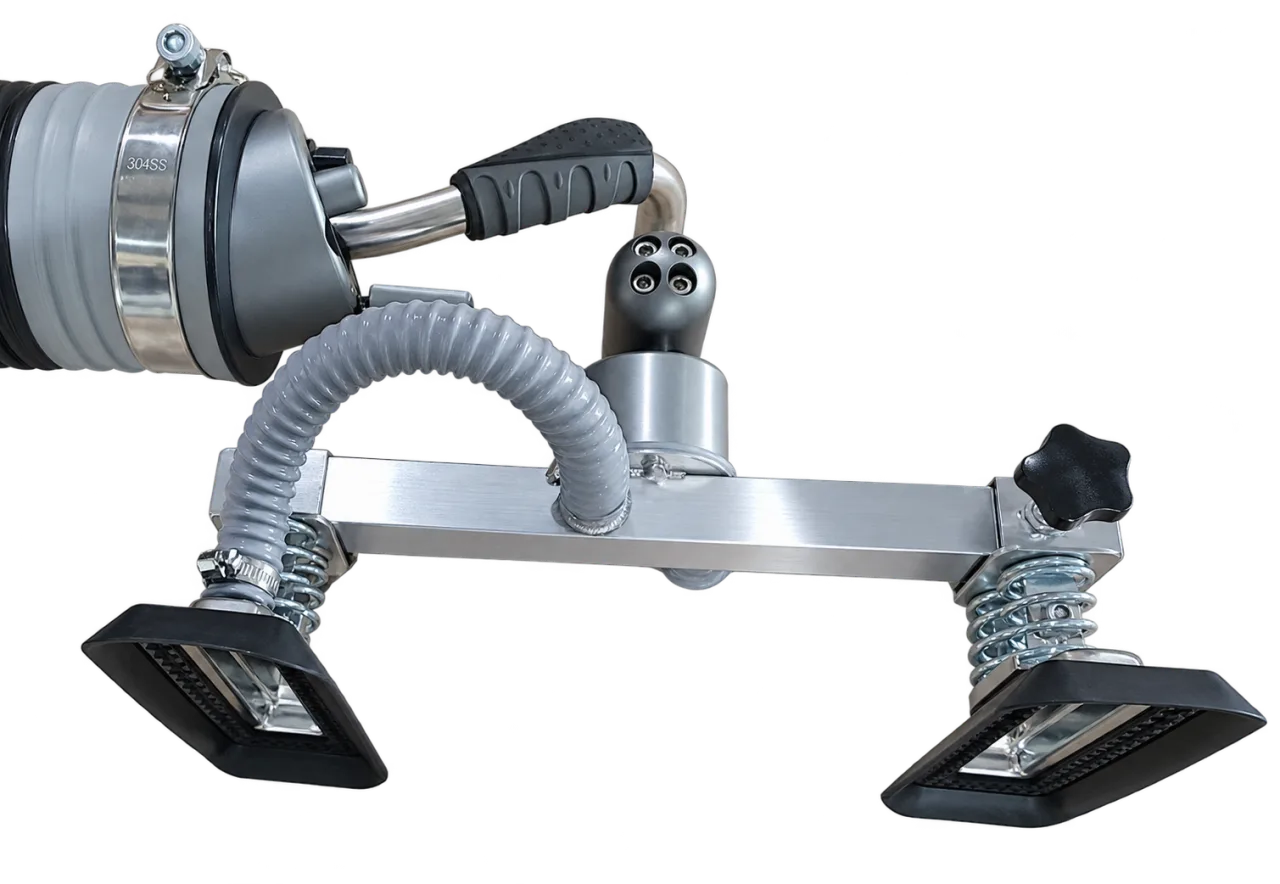
Choose by function and interface
Requirement | Details needed |
|---|---|
Replace a cup or sealing ring | Machine identity, part profile, dimensions, connection and contact material. |
Change the lifting head | Workpiece range, orientation, head weight and approved system connection. |
Handle/control replacement | Control function, connection arrangement and existing part identification. |
Source/filter/hose review | Supply, air path, dimensions, filtration and observed system behaviour. |
Check more than just cup diameter
Identify the working seal and its attachment, not only the outside size. A visually similar cup can use a different profile, material or interface. A changed head can alter the complete operating arrangement; use the approved combination and its limits.
Find the matching component record
The equipment directory separates control handles, vacuum indication, valves, quick-change connections and other component functions. Some of these parts have no independent lifting rating. Use the detailed record and the machine identity to define what is required.
Browse components and spares · Replacement identification checklist · Theoretical suction force
Further questions for your purchasing review
Which details identify the suction cup or head for a quotation?
Part specification, material, interface, quantity and equipment compatibility determine the quotation.
Compare a contact head with a supply component
Component | Scope of use | Selection input |
|---|---|---|
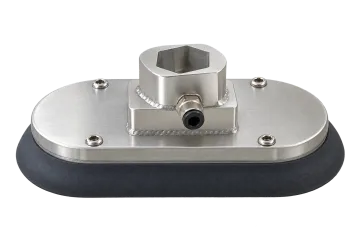
180 × 370 mm bag/box cup. | Filled packaging and the head connection. | |
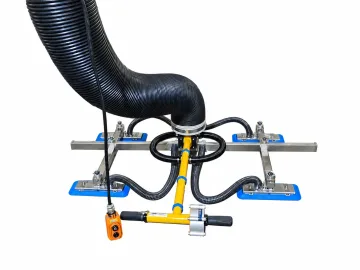
Four 140 × 370 mm pads for panel contact. | Panel geometry and the approved lifting arrangement. | |
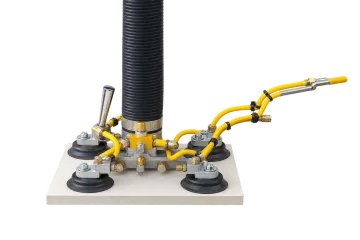
90° MDF tilting head. | Host, panel contact and permitted load/orientation. | |
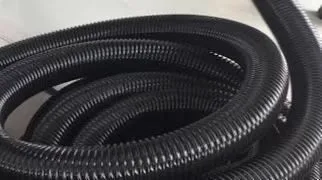
32 / 52 mm supply hose options, 10 m supply length. | Supply path and connections; this is not the lifting tube. |
Replacement identification photographs
Provide one image of the part installed, one of the entire part and a close-up of the connection or seal profile with dimensions. Include any readable part number. These views distinguish an interface-compatible replacement from a similar-looking component.
Read the contact footprint before choosing a head
Place the proposed sealing outline on a photograph or sample of the workpiece. Every part of the intended seal must meet a suitable surface. A head that fits the outside dimensions can still cross a carton flap, bag fold, panel cut-out or unsupported edge.

For a round head, check the usable contact patch, the seal profile and the connection above it. A wider head is not automatically a higher-capacity replacement: the vacuum supply, material and complete lifting assembly must also match.
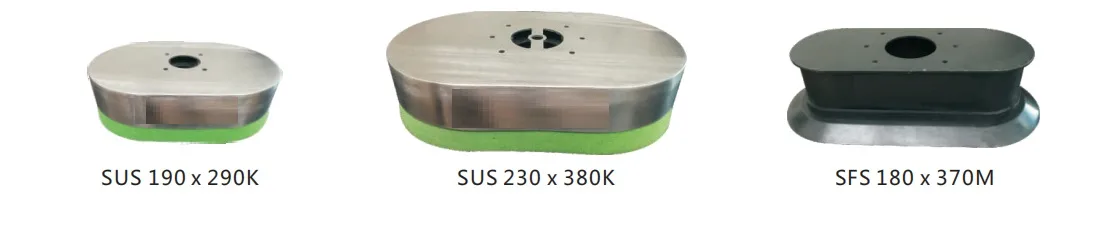
For an oval or elongated head, check both length and width against the smallest package face. Rotate the outline on the sample to see whether a seam or fold passes through the sealing area. Test real filled bags and assembled cartons; an empty, flat sample may present a different surface.
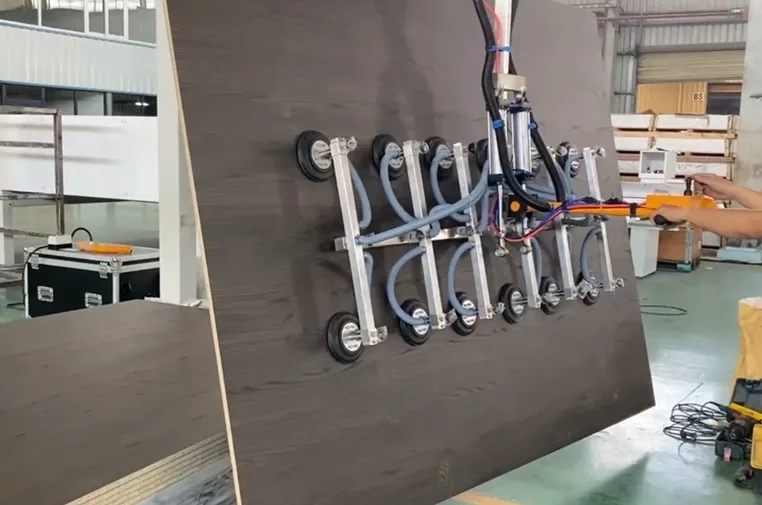
On multi-pad panel heads, seat every pad on a solid contact zone balanced around the panel’s centre of gravity. For vertical lifting or tilting, check both pad layout and tilting load capacity for each panel format.
Describe the failed contact, not just the package name
Observation | Information to send |
|---|---|
Head seals on one carton but not another | Both carton faces, board finish, flap or tape positions and filled weights. |
Bag surface pulls into the head or changes shape | Filled sample, film or sack construction, folds and the proposed pickup area. |
Panel flexes or a pad approaches an edge | Panel size, thickness, weight, cut-outs and a marked pad layout. |
Use the replacement-parts guide when changing an existing head, or the bag and carton guide when designing a complete station.