Identify the drum, lid and contents
Supply a drawing or photographs showing the top, side, base and rim. State material, dimensions, empty/filled weight, lid attachment and whether the contents can move. Include all drum variants rather than sending only the heaviest example.
Decision | Vacuum contact | Mechanical engagement |
|---|---|---|
Required contact | A suitable face that the approved head can seal against. | A suitable rim, body or other approved engagement point. |
Package integrity | The contact face and lid must tolerate the handling arrangement. | The engaged feature must tolerate the applied forces. |
Surface sensitivity | Check seals, contamination and permitted surface condition. | Check possible marking and allowable contact pressure. |
Open container | Do not assume a top vacuum pickup is feasible. | Assess the proposed grip and containment throughout the movement. |
Turning or pouring | Requires a configuration approved for the motion. | Requires a configuration approved for the motion. |
Separate lifting from tilting and pouring
If the drum is only transferred upright, describe pickup and placement. If it must be tipped, show the discharge height, rotation and clearance around the receiving vessel. Contents may shift, so the workpiece and gripping assessment must cover the whole operation.
Select the complete device
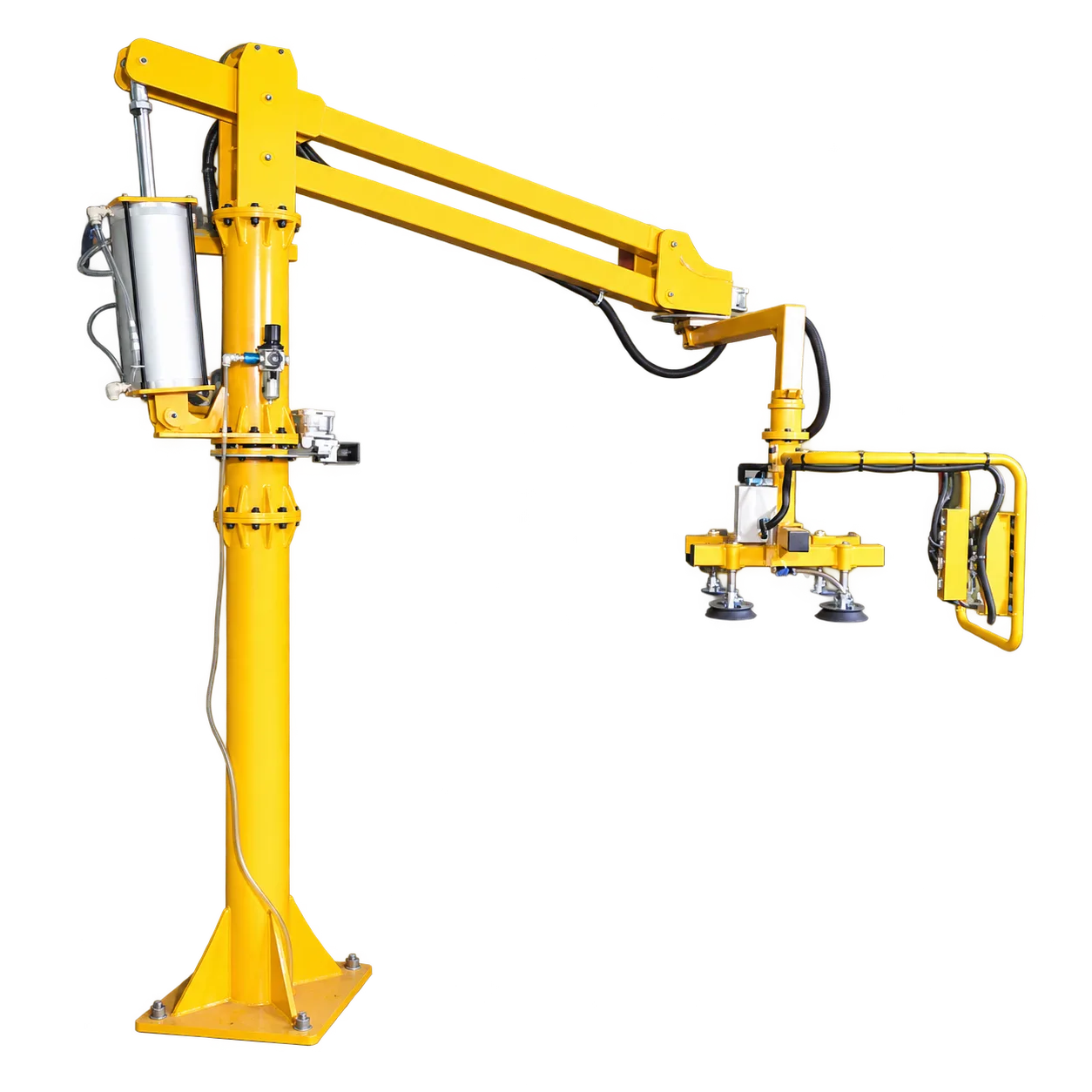
The support may be a manipulator, tube-lifting system or another documented arrangement. Include tool weight, reach, supply and operator controls. The existence of a gripping concept does not mean every arm or lifting unit can use it; request the approved arm/head combination.
Compare quotation and trial scope
- List the accepted drum constructions and weight range.
- Identify the exact contact or engagement points.
- Record the required transfer and any turning operation.
- Use representative filled containers and agreed acceptance checks.
- Confirm the supplied tool, support, utilities, documents and exclusions.
An engagement example with a clear boundary
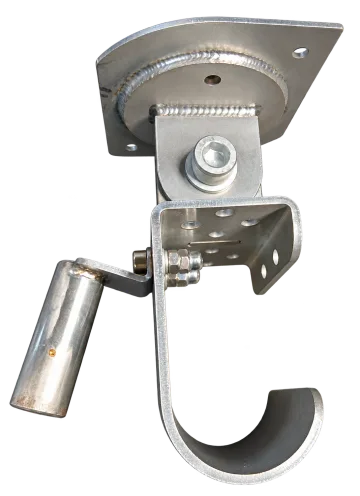
ET-VC-HOOK-PAIL — Drum Handling Hook — ET-VC-HOOK-PAIL is documented for handling drums by their lifting handle. It is neither a rim clamp nor an automatic pouring attachment.
For a handled pail, the question is whether the actual handle and container are intended for that lifting method. For a closed drum with vacuum top pickup, the question shifts to the strength and seal of the lid/contact face. For a rim clamp, the rim geometry and allowable forces become central. The same filled mass does not answer any of those questions.
Decide whether the container stays upright
If pouring is required, identify the final angle, receiving height and retention through the turn. A grip accepted for vertical transfer is not automatically accepted for tipping, particularly where contents shift or the closure changes.
Drum handling applications · Roll and drum enquiry checklist · Custom manipulator cost