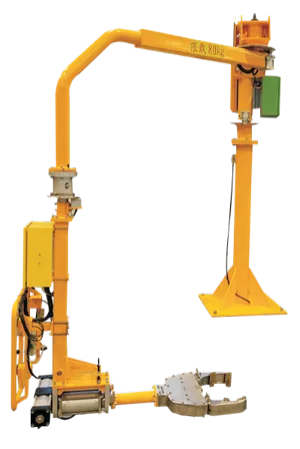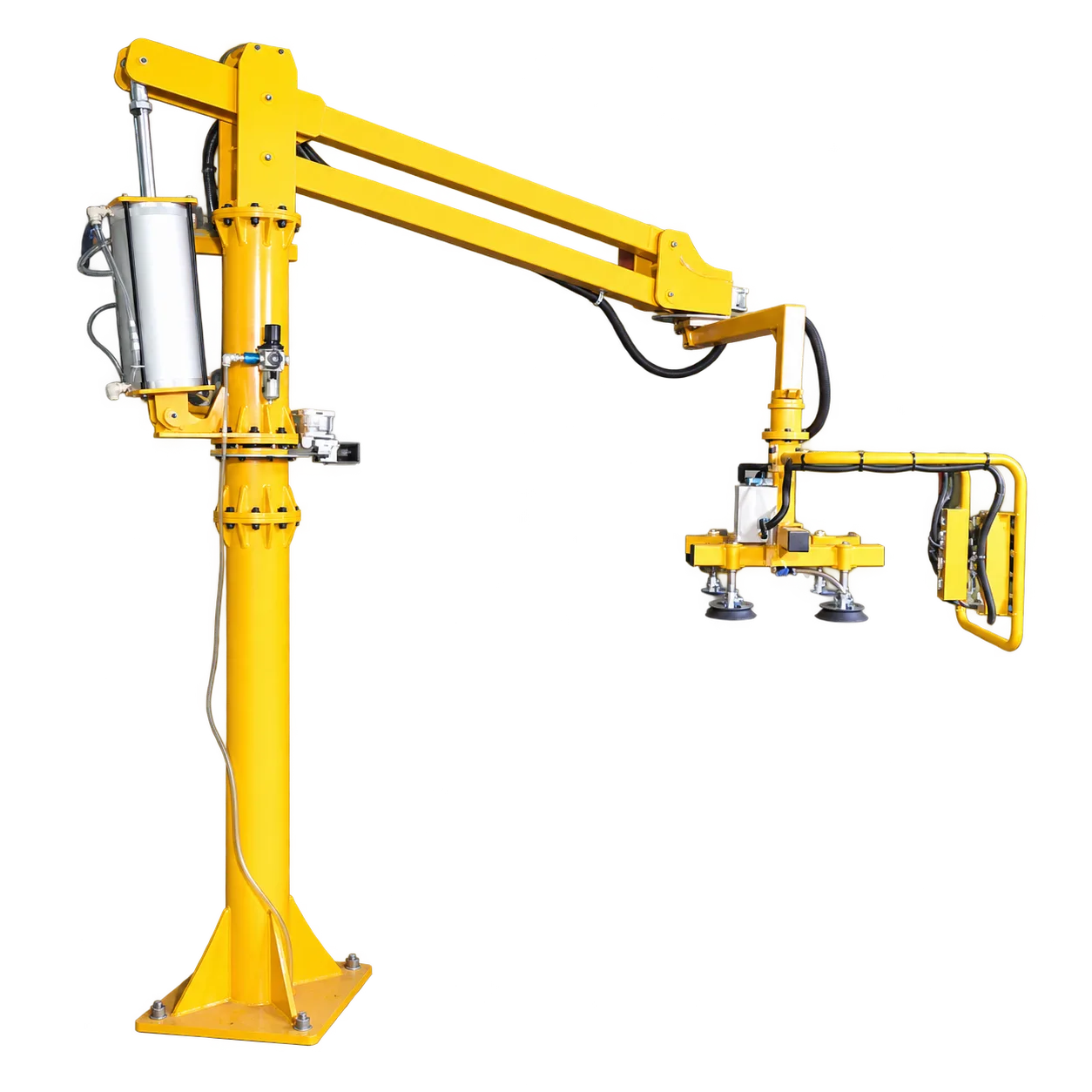
Separate the arm from the custom work
The same arm format can support very different handling tasks. A reel, container or offset assembly may require a different gripping interface, rotation and mounting. State the workpiece family and the permitted contact areas before requesting a price.
Scope item | Information needed for a useful quotation |
|---|---|
Workpiece | Drawings, weight range, centre of gravity, contact restrictions and product variants. |
End effector | Grip/release method, contact materials, tool weight and changing requirements. |
Motion | Pickup and placement coordinates, lift, reach, turning and positioning needs. |
Mounting | Floor, overhead or other approved support, installation space and structural information. |
Utilities and controls | Available supply and required operating/control functions. |
Validation | Samples, representative cycle, inspection criteria and required documentation. |
Price the difficult part of the cycle
Include the most constrained pickup, the largest offset and the final placement operation. Quoting only a vertical lift leaves the tool design and movement requirements unresolved. If a task needs several load formats, identify which components remain common and which are changed.
Compare inclusions without inventing a standard price
Ask for the arm, tool, base/support, control equipment, utilities interface, installation responsibilities and acceptance scope as identifiable items. Record options and exclusions. There is no single defensible price for all custom manipulators without that definition.
Use an acceptance matrix
- One row per representative workpiece or load family.
- Grip position, required orientation and complete movement path.
- Operating conditions and installed tool for that test.
- Agreed observations or measurements and who accepts them.
- Documents and configuration identification delivered with the equipment.
The same arm can hide different custom work
ET-MP-PN-200 — Pneumatic Rigid-Arm Manipulator — ET-MP-PN-200: 200 kg pneumatic rigid-arm platform with a 2.5 m jib.
Using this platform for an upright drum transfer would require an accepted drum engagement and release method. Loading a reel onto a spindle would require a core or outer grip, possible axis change and withdrawal clearance. The shared arm values do not make the two end tools or acceptance tasks identical.
Custom work package | Keep visible in the offer |
|---|---|
End tool | Grip, rotation, interfaces, contact material and allowable workpieces. |
Mounting | Base or overhead support and installation design responsibility. |
Controls | Operator interface and required interlocks/functions for the selected assembly. |
Acceptance | Representative parts, test scope and records. |
Changes | Which additional workpiece variants require a new tool or review. |
Continue your equipment review
Manipulator, balancer or hoist · Roll/reel and drum requirements · Industrial manipulator range
Questions for this equipment decision
Which customization choices are major manipulator cost factors?
Custom grippers, arm reach, mounting, turning functions, controls and application testing are major cost factors.
What determines the cost of a custom industrial manipulator?
The arm, working radius, stroke, mounting, controls and workpiece gripper determine the configuration. Send drawings, weight range, centre of gravity and the full handling sequence. Ask for tooling, installation interfaces, verification, documents and spare parts to be identified separately in the quotation.