Describe the load through the complete transfer
Record the smallest and largest loaded dimensions, total weight and centre of gravity. Show pickup orientation, required turning and final placement on a simple sequence drawing. State whether contents can move or the packaging changes shape during handling.
Load | Information needed before a gripper can be selected |
|---|---|
Reel or roll | Outside diameter, width, core dimensions and strength, winding direction, surface and permissible contact pressure. |
Drum or barrel | Diameter, height, material, lid/rim construction, open or closed state and whether contents shift. |
Container requiring pouring | Grip position, rotation angle, discharge height, free space and how release is prevented during turning. |
Fragile or finished load | Areas that cannot be marked or compressed, and the acceptable surface condition after handling. |
Compare the engagement methods
An internal expanding grip needs a core designed to accept that contact. An external clamp needs a suitable contact area and acceptable clamping pressure. Vacuum requires an appropriate contact face and a validated seal. A mechanical rim grip needs a rim that is suitable for the specific engagement. These are selection routes to assess, not a statement that every method is available on every Easytech model.
Choose the supporting device after the end tool
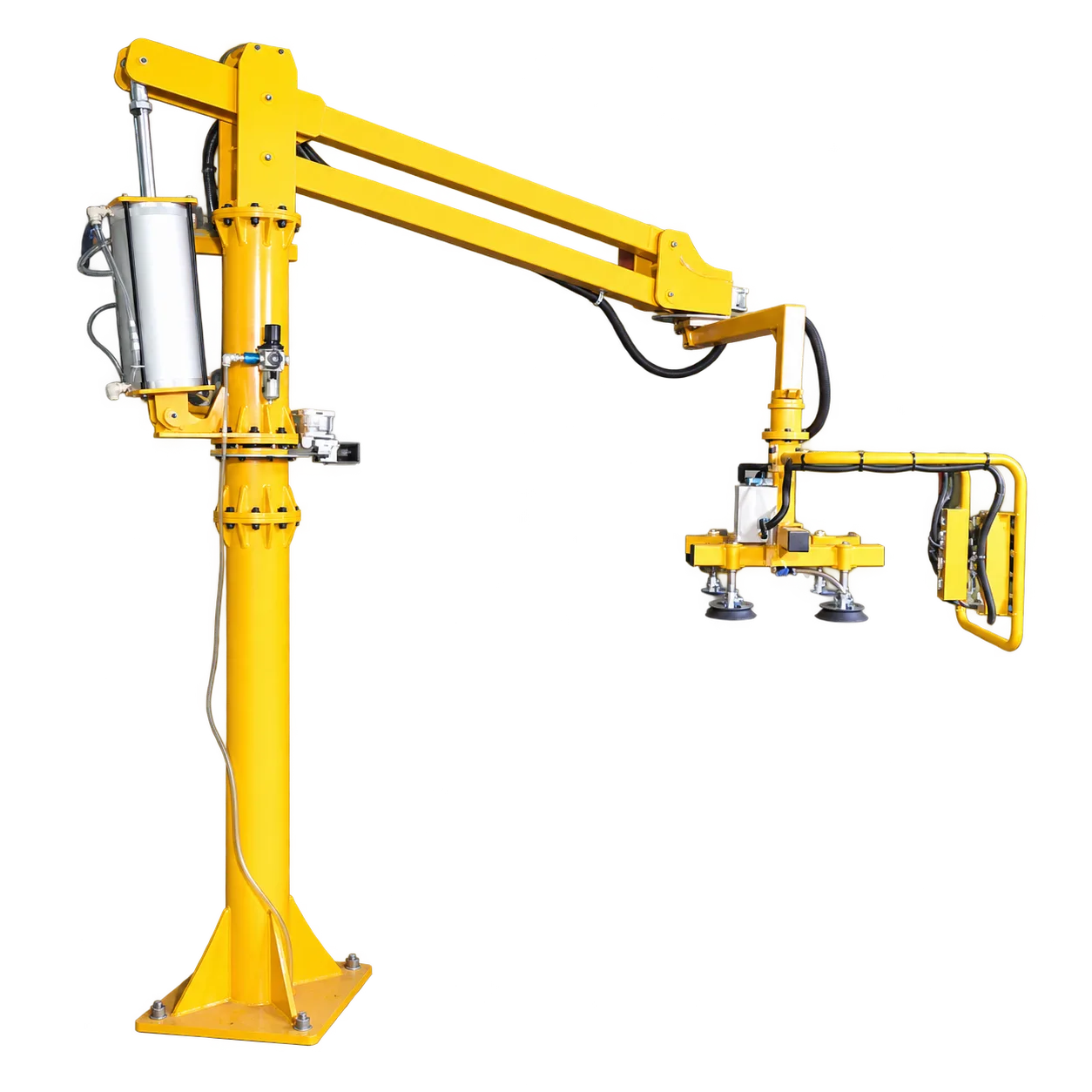
A rigid arm, cable-supported device and tube-lifting system guide the load differently. Include end-tool weight, offset and required rotation when reviewing the arm. The quoted assembly must identify both the supporting equipment and the tool, with their permitted operating conditions.
Make a sample trial informative
- Provide representative minimum and maximum loads and packaging variations.
- Demonstrate pickup, transfer, turning and release at the intended positions.
- Record contact marks, package deformation and any change in grip.
- Confirm how the operator controls the load and sees the placement area.
- Agree the accepted operating envelope and supplied documentation before ordering.
A requirement sheet for two different loads
Requirement | Reel loading a spindle | Drum transferred upright |
|---|---|---|
Contact | Core dimensions and allowable engagement, or permitted outside contact. | Lid/rim/handle construction and approved lifting feature. |
Final movement | Core alignment and insertion with clearance for tool withdrawal. | Stable placement on a pallet or support before release. |
Worst variant | Smallest usable core, widest roll and most delicate surface. | Heaviest contents and least favorable permitted closure. |
Changed task | Turning axis or loading a different spindle. | Pouring or opening the drum during handling. |
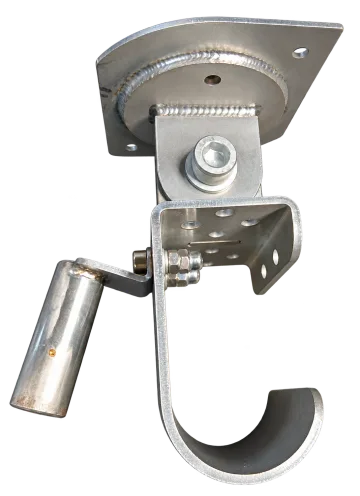
ET-VC-HOOK-PAIL — Drum Handling Hook — A documented lifting-handle hook. It supplies a specific engagement concept, not a universal clamp or pouring function.
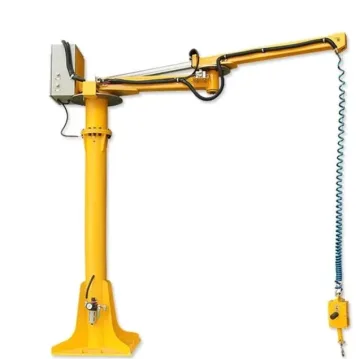
SAC-RS200 — Column-Mounted Cable Balancer — A 200 kg cable-balancer platform. Its 1,500 mm vertical stroke and 500–2,500 mm radius help define the station; the end tool still needs its own design.
Continue your equipment review
Drum handling options · Roll and reel applications · Vacuum versus mechanical drum gripping
Questions for this equipment decision
What affects the price of a roll or drum handling system?
Custom grippers, arm reach, mounting, turning functions, controls and application testing are major cost factors.
What gripper information is needed for reels, drums and offset loads?
For reels, provide core diameter, outside diameter, width, mass and material. For drums, provide dimensions, material, rim or closure details and the permitted gripping areas. Identify centre-of-gravity offset and required rotation for every load. Review the gripping method with drawings or a representative sample.
How should a manipulator handle changes in load or loss of supply?
Ask how the selected device responds to changing loads and loss of its power or air supply. Load balancing, gripper retention and supply-loss protection are separate functions. Review the actual control and circuit information and the agreed test procedure. Pneumatic operation alone does not establish that a load will be retained after air loss.