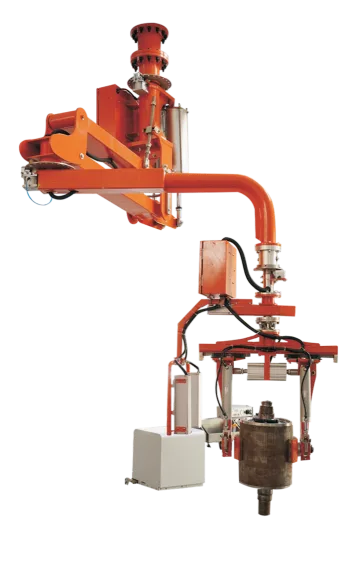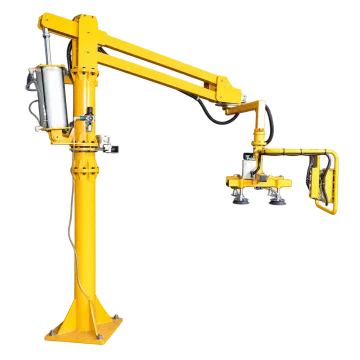
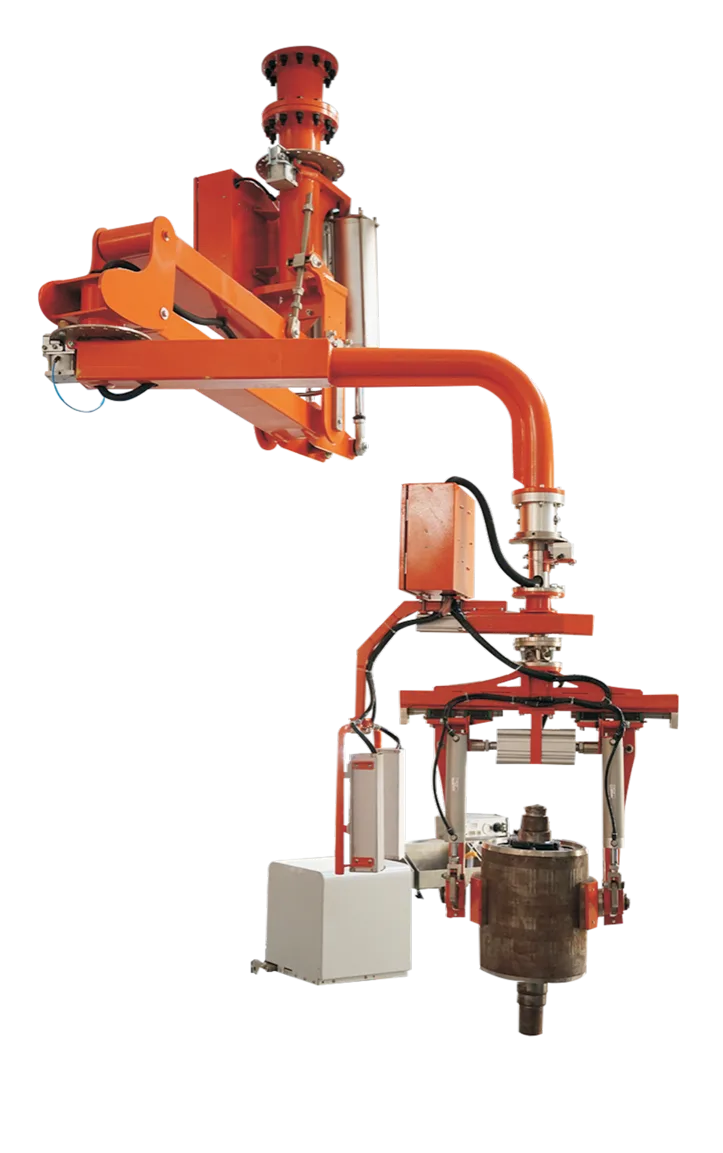
Model configuration and selection
Fixed overhead mounting keeps your floor space clear while serving a dedicated workstation within a 2,500 mm arm radius. Include end-effector weight in your load total and check inner/outer reach limits on the installation drawing.
Compare model configurations
Selection point | ||||
|---|---|---|---|---|
Load | 300 kg | 300 kg | 300 kg | 300 kg |
Minimum working radius B | 630 mm | 630 mm | 750 mm | 750 mm |
Maximum working radius C | 2500 mm | 2500 mm | 2500 mm | 2500 mm |
Lowest end position D | 500 mm | 500 mm | 500 mm | 500 mm |
Highest end position E | 1700 mm | 1700 mm | 1700 mm | 1700 mm |
Highest manipulator position F | 3350 mm | 3350 mm | 3450 mm | 3450 mm |
Machine weight | 500 kg | 500 kg | 420 kg | 420 kg |
Mounting arrangement | Traveling overhead | Fixed overhead | Mobile-column | Fixed-column |
Equipment and intended application
A balancing mechanism supports the end effector and workpiece while the operator guides their position. The gripper supplies the workpiece-specific connection; the arm or cable mechanism and mounting structure define the working envelope. The end-effector mass is part of the load that the system must support.
Workpiece compatibility
Topic | Details |
|---|---|
Workpiece and grip | Match the end effector—clamp, hook or vacuum head—to your workpiece geometry, surface finish, centre of gravity and required rotation or tilt, as each tooling option has its own load rating. |
Machine access | Check both the minimum and maximum working radius, the lowest and highest end positions and the space occupied by the arm above them. |
Assembly work | Describe whether the operator needs to hold a part level, turn it, reach into a machine or maintain a floating load while aligning fasteners. |
Power supply and configuration
Topic | Details |
|---|---|
Balancer | The balancing unit carries the combined end-effector and workpiece load within its stated envelope. |
End effector | The fixture is designed around the actual workpiece and handling sequence. Its weight, gripping points and orientation functions are part of the configuration. |
Mounting | Fixed, mobile, overhead and rail-mounted arrangements have different structural and clearance requirements. Use the mounting stated for the selected model. |
Utilities | Pneumatic and electric drive versions are separate configurations. Apply only the pressure or electrical requirements actually listed for the model. |
Installation and commissioning
- Plot pickup and placement coordinates relative to the mounting point. Include the minimum-radius blind area and the full moving-arm envelope.
- Verify that your floor slab, overhead rail or mobile base is engineered for the full manipulator weight and dynamic operating loads.
- Install the selected fixture and utility supply, then commission its balance, grip/release controls and locking functions with representative workpieces.
- Provide the operator with a clear path and access to the controls at every required posture. Reassess the system when the fixture or workpiece changes.
Handling sequence
- Inspect mounting, joints, fixture and the applicable utility supply.
- Engage the fixture using its defined gripping procedure and verify that the workpiece is secure.
- Guide the balanced load through the clear working envelope without forcing it against a travel stop.
- Support the workpiece at the destination before releasing the fixture; park the arm in its designated position.
Inspection, maintenance and replacement parts
Topic | Details |
|---|---|
Arm and mounting | Inspect fixings, joints and locking functions for looseness, wear or drift. |
Fixture | Check contact pads, clamp jaws, hooks or vacuum elements according to the installed gripping method. |
Pneumatic versions | Check air quality, filter bowl, hoses and leakage; do not alter factory balance settings to compensate for a fault. |
Changed loads | Recheck balance and grip after replacing an end effector or changing the workpiece mass or centre of gravity. |
Troubleshooting priorities
Topic | Details |
|---|---|
Load drifts or balance changes | Support the workpiece and check the fixture mass, utility supply and balance system before continuing. |
Cannot reach the placement | Check minimum radius, maximum radius, end height and obstacles. Do not force the arm beyond its mechanical envelope. |
Fixture slips | Stop use and review gripping surface, fixture engagement and the actual workpiece geometry. |
Frequently asked questions
What load should I use when selecting HAH-BS300?
HAH-BS300 is rated for 300 kg in its standard configuration. Actual working capacity depends on workpiece size, surface, orientation and any attached tooling; on boom or telescopic models, check the load chart for your exact reach and height.
Does the load figure include the gripper?
The balancing mechanism supports the end effector as well as the workpiece. Assess their combined mass and the centre of gravity when sizing the system.
Why does minimum radius matter?
A position too close to the column may be unreachable even though it is inside the maximum-radius circle. Plot both pickup and placement against the complete arm envelope.
Can one fixture handle every part?
Only if its grip, adjustment and load limits cover those parts. Part families with different centres of gravity or gripping features may need different fixtures.