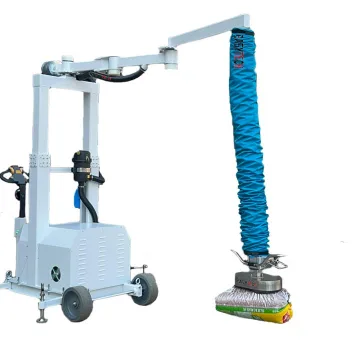
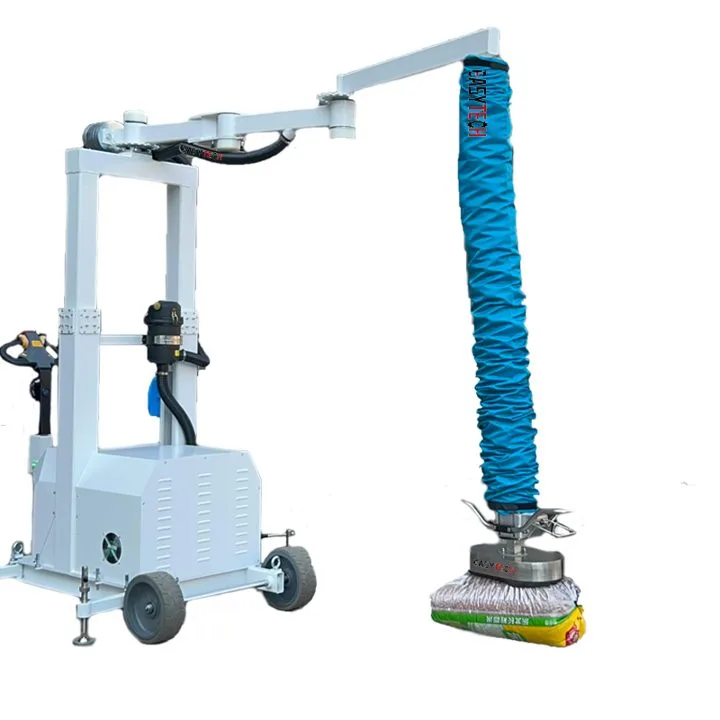
Model configuration and selection
The jib rotates through 250° and the unit has a 10 m cable reel, a steel counterweight base and height-adjustable support feet. Adjustable feet level the working base; they do not define a telescopic lifting column. Lock the jib before relocation. Compare ET-TL-TEL-060 when column-height adjustment is required. Prepare the minimum doorway height, floor route, pickup and placement heights and actual package sample when specifying the station.
Compare model configurations
Selection point | |||
|---|---|---|---|
Rated load | 60 kg | 60 kg | 60 kg |
Folded clearance height | 2100 mm | — | — |
Jib rotation | 250 ° | — | 250 ° |
Power supply | Mains / battery dual power options | — | — |
Travel | Battery-powered | — | — |
Column | — | Telescopic lifting | — |
Repositioning method | — | Forklift repositioning; lock the jib first | Manual / forklift repositioning; lock the jib before repositioning |
Jib length | — | — | 3000 mm |
Equipment and intended application
The same vacuum system grips the load and changes the length of the lifting tube. The operator meters air through the control handle to raise, hold or lower the workpiece. A jib or overhead rail carries the suspended tube assembly; the vacuum generator supplies airflow through a separate hose and filter.
Workpiece compatibility
Topic | Details |
|---|---|
Bags and sacks | Position the bag head on an intact area away from seams, folds and loose valves. Test the filled bag rather than an empty packaging sample: porosity, fill movement and the outer layer affect the grip. |
Cartons and containers | The complete pad sealing area must sit on a sound panel. Check lid strength, tape seams and any internal bag; lifting the outer carton must lift the contents without separating the packaging. |
Panels and longer workpieces | Distribute the pads across the load to control bending and overhang. Changing to a larger head adds suspended mass and requires a new assessment of tube and suspension capacity. |
Power supply and configuration
Topic | Details |
|---|---|
Lifting assembly | Tube, top swivel, control unit and workpiece-matched suction head form the suspended assembly. The table specifies the model rating and tube dimensions where available. |
Handle selection | Type A is a single-hand arrangement; Type B uses a rocker control; Types C and E provide extended two-hand control. Handle reach, operator position and release access must suit both the lowest pickup and highest placement. |
Supporting system | Column jib, wall jib or overhead rail is selected for the work area. Include the vacuum generator, hose routing, filter, electrical connection and support structure in the system layout. |
Optional accessories | Quick-change suction heads, blower mounting brackets and sound enclosures can be added as options; always size the complete system to the lowest-rated component (lifting tube, head and handle). |
Installation and commissioning
- Map the lowest pickup, highest placement and horizontal travel. The tube length, usable lifting stroke and available ceiling height are different dimensions; allow space for the trolley, swivel, handle and workpiece.
- Provide a suitable support structure and electrical supply for the selected generator. Keep the generator inlet, cooling path and exhaust unobstructed, and route the vacuum hose without tight bends or snagging points.
- At commissioning, check generator airflow direction, hose connections and filter installation. A trained technician sets the unloaded suspension position and then checks the loaded response with the actual workpiece.
- Mobile versions require the base, support feet and arm locks to be used in the specified operating and transport positions. A forklift used to relocate a unit does not make it permissible to travel with a suspended load.
Handling sequence
- Inspect the lifting tube, supply hose, head seal, connection and support system. Establish that the selected head and packaging match the load.
- Bring the head squarely onto the contact surface and apply suction using the fitted handle. Verify an even grip before raising the load.
- Raise only enough to clear the pickup, keep control of the handle and guide the load through the planned travel path. Do not drag a load sideways with the tube.
- Lower until the destination fully supports the load, then operate the release. Keep the release control distinct from the control used to lower the load.
Inspection, maintenance and replacement parts
Topic | Details |
|---|---|
Before use | Check the head seal, tube folds, hose clamps and quick connector. Stop if the tube is cut, a connection is loose or the control response changes. |
Air path | Check the dust filter according to actual dust loading. Isolate the generator before opening the filter; do not operate without its element. Use the cleaning method specified for that element. |
Replacement selection | Identify the tube diameter and length, end connections, head seal profile and filter type. A hose of similar appearance is not automatically a lifting tube. |
After maintenance | Recheck leakage and control response unloaded, then perform the prescribed functional checks before returning to production. |
Troubleshooting priorities
Topic | Details |
|---|---|
Will not lift the intended load | Check pad sealing, packaging porosity, dust filter cleanliness and hose joints—porous sacks require adequate airflow as well as vacuum level. |
Unloaded head rises or drops unexpectedly | Stop and have the suspension adjustment and control unit checked. Do not compensate by closing an adjustment valve fully. |
Grip deteriorates during lowering | Support the load and stop use. Have the head, air path and loaded control adjustment checked before restarting. |
Frequently asked questions
What load should I use when selecting ET-TL-MOB-060?
ET-TL-MOB-060 is rated for 60 kg in its standard configuration. Actual working capacity depends on workpiece size, surface, orientation and any attached tooling; on boom or telescopic models, check the load chart for your exact reach and height.
When are separate surface load ratings used?
Porous or loose surfaces allow more leakage than sealed surfaces. If the table lists separate ratings, use the rating for the actual packaging and test a representative load. A sealed-surface figure does not apply automatically to sacks.
Does the tube length equal the lift height?
No. Tube length describes the lifting element, while stroke is its usable movement. Installation height also includes the support trolley, top swivel, control head and workpiece.
Can one system handle both bags and boxes?
It can be configured with suitable heads, but a head change also changes contact geometry and suspended weight. Each head-and-workpiece combination needs its own grip and operating check.