
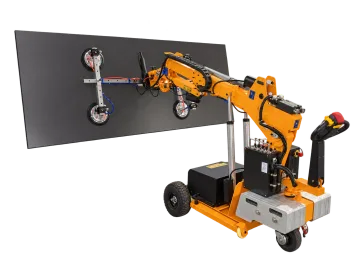
- Load & conditions
- Maximum rated load400 kg; working-position limits applyLoad limitationsVaries with outreach and posture; use the load chart. Maximum height is not the full-load height.
- Lifting height
- Maximum lifting height3200 mm
- Reach & extension
- Arm extension / outreach500 mm
- Access dimensions
- Minimum overall dimensions1298 × 730 × 1852 mm
Easytech
From glass storage to installation
Use this illustrative glass-handling plan to assess workshop pickup, site access and installation reach. Prepare workpiece and route details for equipment selection.
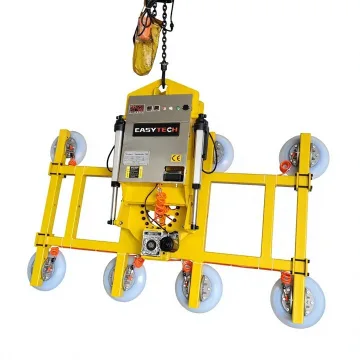
- Load & conditions
- Rated load600 kg
- Workpiece & surface
- MaterialsGlass
- Movement
- TiltingElectric 90°RotationElectric 360°
- Suction configuration
- Number of pads6 pcsPad diameter300 mm
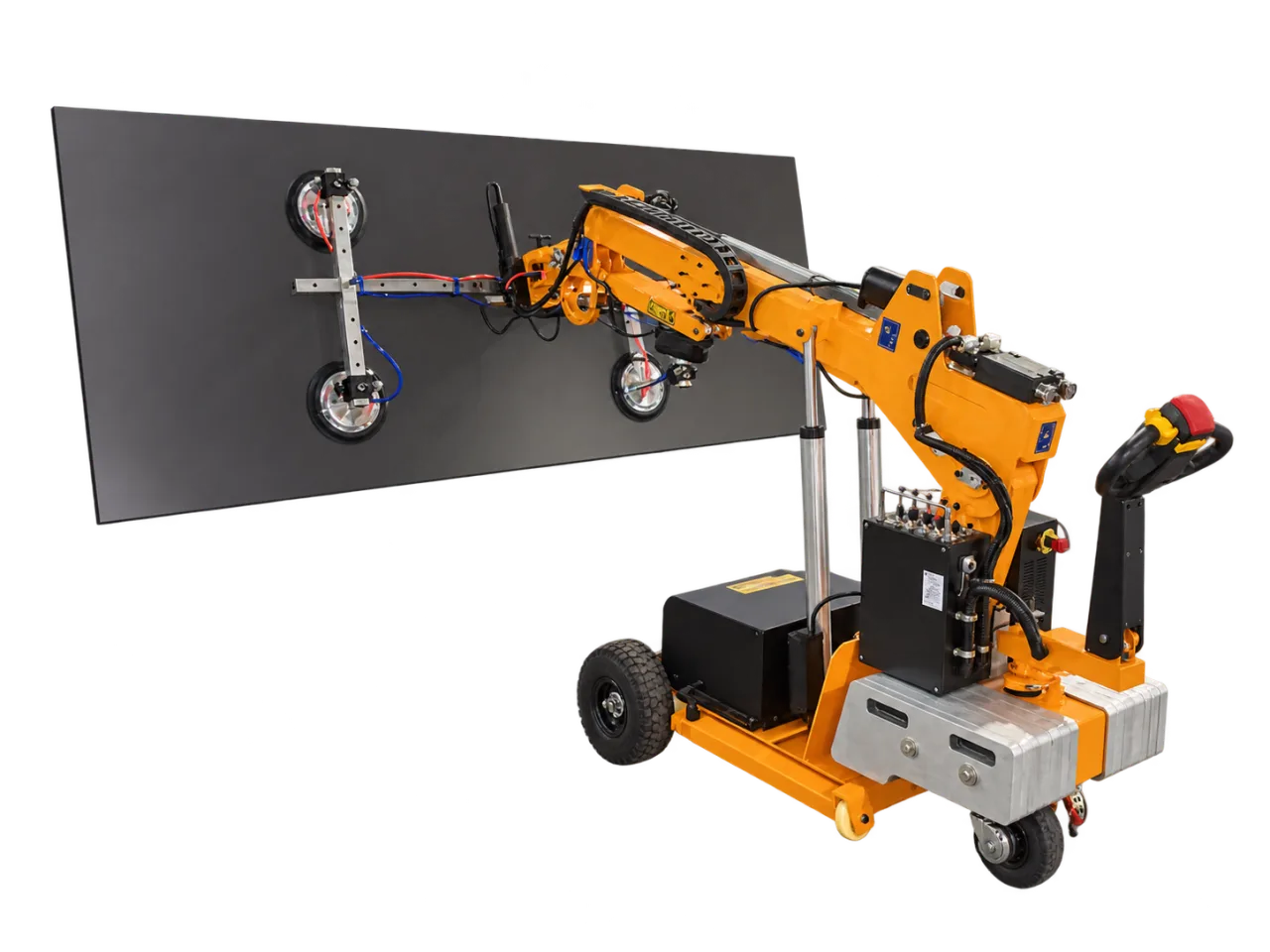
Plan glass movement from storage to installation
Use this planning example to define the handling stages and requirements for your own workstation.
Stage | Decision and deliverable |
|---|---|
Storage pickup | Record rack orientation, pane geometry, contact face and access. |
Site route | Measure doors, turns, ramps, floor/ground and unloading constraints. |
Equipment choice | Compare mobile robot working positions with the coverage and lifting arrangement for a suspended frame. |
Final placement | Check height/reach, alignment, pane support before release and frame withdrawal. |
Acceptance | Confirm representative pane, exact configuration, load chart and the agreed complete sequence. |
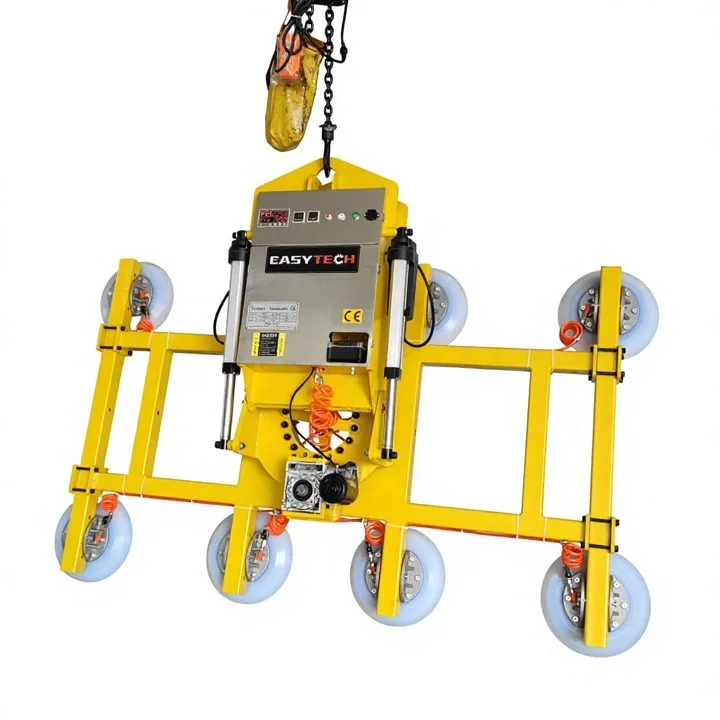
Prepare the project review
Send a layout, representative workpiece details and the required movements. Identify existing equipment that must be retained, available utilities and the destination. The final proposal must name the selected configuration, interfaces, operating conditions and agreed acceptance scope.
Robot versus suspended lifter · Glass load-chart guide
Choose between access and lifting support
Question | Mobile robot | Suspended vacuum frame |
|---|---|---|
Where will the equipment stand? | Map travel, floor/ground and the installation position. | Map crane/hoist coverage, hook approach and support. |
What constrains the lift? | Load chart, attachment and machine setup. | Approved frame arrangement plus the support machine and rigging. |
How is the pane aligned? | Review actual powered/manual positioning functions. | Review frame tilt/rotation and crane movement. |
How is it released? | Allow room for the machine/head to withdraw. | Allow room for the frame and rigging to withdraw. |
Start with two distinct equipment routes
WSR-400MINI — Wheeled Glass Installation Robot — 400 kg maximum, 730 mm stated minimum machine width; the pane and turning envelope still need checking.
ETJSB-G600F — Electric Tilting & Rotating Glass Lifter — 600 kg suspended glass frame with powered tilt/rotation; an appropriate supporting lifting arrangement is required.
Carry the pane identity through the handover
Keep the same pane number, mass, dimensions, contact restrictions and final location from storage planning through installation. If the pane or attachment changes, revisit the working position and support arrangement rather than relying on the original shortlist.
Content updated
GET A QUOTE
Need a price or model recommendation?
Send your workpiece weight, size, or a photo — Jenny replies within 24 hours.
MOQ: 1 unit · Reply within 24 hours