
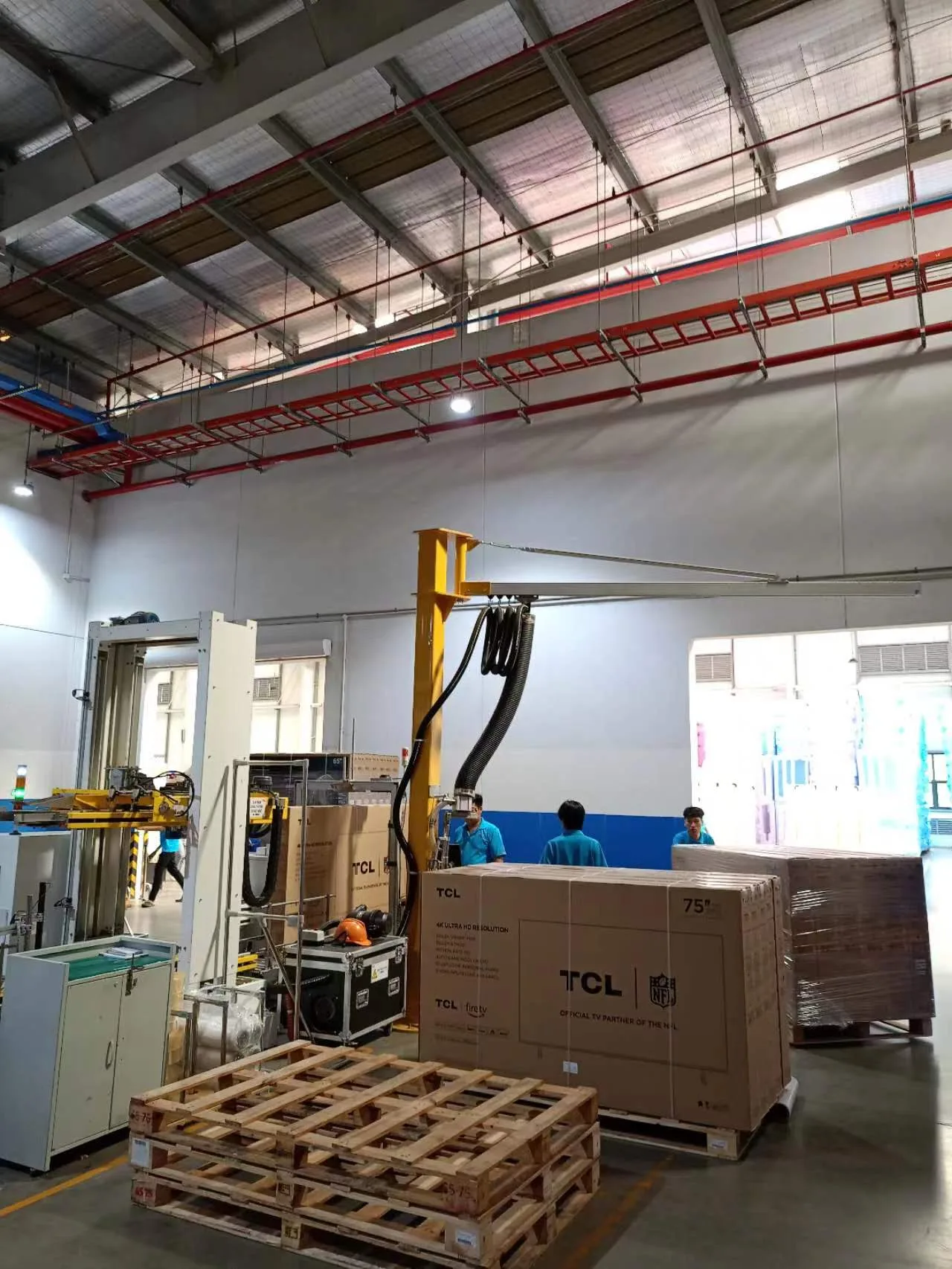
A large carton with a narrow top
The cartons were tall, wide across the television face and narrow through their thickness. The documented sizes were 1,265 × 145 × 775 mm, 1,400 × 150 × 864 mm, 1,645 × 165 × 1,000 mm and 1,850 × 190 × 1,125 mm, expressed as length × width × height. The project-specific maximum workpiece weight was 45 kg.
A conventional top-contact head cannot be selected from weight alone. On these cartons, the narrow top limits the available footprint, while taped joints, edges and the internal support of the packaging also affect the contact area. The documented solution approached a broad side face instead.
Why side gripping changes the question
Moving the contact face from the top to the side changes how the load acts relative to the suction head. A tube assembly rating does not automatically become the capacity of a side-grip system. The carton surface, head arrangement, support inside the packaging and complete movement must be considered together.
The 45 kg value is the application requirement. Selection of the complete head must also account for the carton face and its support; a nominal tube capacity alone does not establish a side-grip limit.
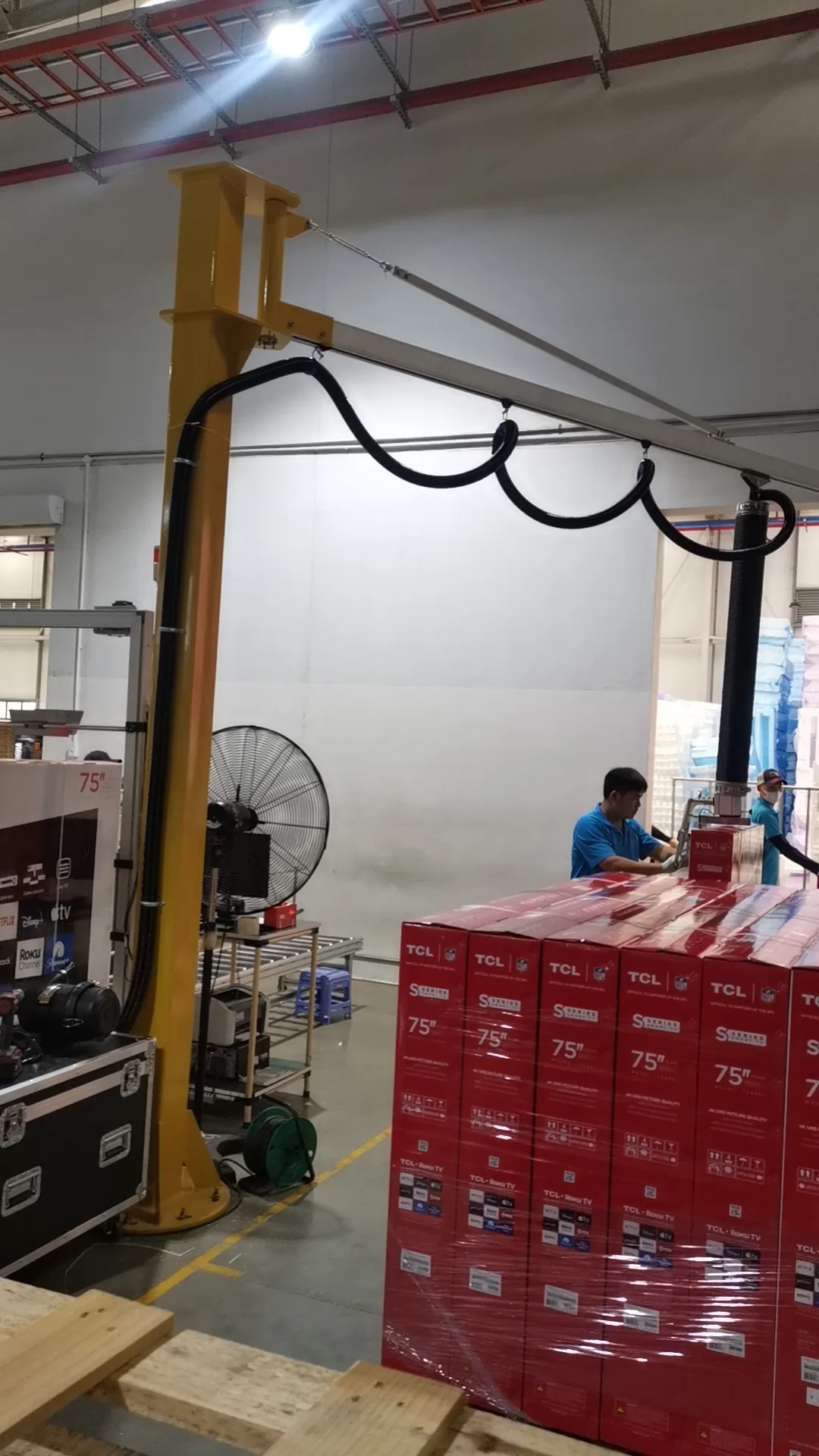
Follow the carton through the workstation
The intended sequence was to approach a carton at the production line, establish contact on the selected side, transfer it within the supported working area and place it on a pallet. The supplied factory photographs show the suspended handling arrangement and the pallet area.
During layout review, check whether the broad contact face is accessible before lifting and remains accessible at placement. Trace the corners of the largest carton through the route. A head may reach the pallet center while the carton itself cannot clear a nearby stack or machine.
Test packaging, not just an empty box
Use representative packed cartons in the intended orientation. Record which face and position were used, the package size and mass, and whether labels, tape, folds or changes in board condition alter the contact. Inspect packaging condition after placement as well as at pickup.
The smallest width is important for access; the largest length and height are important for the transfer envelope. One successful lift of a convenient sample cannot establish compatibility with the entire size range. Keep the proposed acceptance checks tied to the actual packaging variants.
Evaluate the complete production cycle
The supplied record does not contain a measured production-cycle series. Set the required output for the actual line and verify it with the intended packaging, travel distance and placement sequence.
To evaluate output on your own line, include approach, pickup, travel, accurate placement, release and return. Record interruptions and packaging changes separately. The resulting cycle record is more useful than comparing isolated lift speeds.
What makes this case useful for another carton line
Send a packaging-size table with mass for each variant, photographs of the intended gripping face and a plan showing line height, pallet positions and stack limits. Identify which face must remain visible or undamaged. These details determine whether side contact is viable before choosing a tube and support system.
This case is grounded in the project-specific carton proposal and factory photographs. It does not claim certification of the packaging or a guaranteed damage-free result. The current carton-handling guide explains the broader selection questions; the installed arrangement remains specific to this project.