
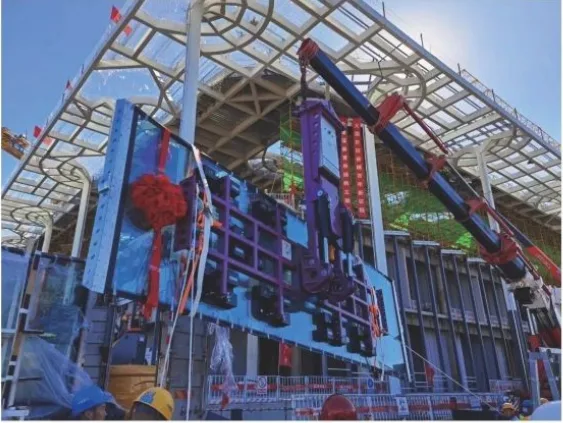
Crane-supported placement of a large glass assembly at the building structure.
Read the evidence for this application
Use the application photograph to understand the handling arrangement, then check the model data against your own workpiece and installation position.
RDS-5T equipment details · Download the RDS-5T specification PDF
Use the photograph and model data for different decisions
The photograph records an equipment application. It does not establish the pane weight, a tested cycle time, the customer identity or approval of your site. The table below identifies the published model configuration to review alongside your own project drawing.
Model / configuration | Rated load | Standard pad dimensions | Standard number of pads | Optional pads for curved glass |
|---|---|---|---|---|
5000 kg | 850 × 550 mm | 10 pcs | Ø280 mm × 6 pads / group; 10 groups. Permitted load depends on glass curvature, contact positions and handling orientation; the flat-glass rating does not apply automatically. |
Three interfaces to resolve before a comparable lift
Interface | Review |
|---|---|
Glass to frame | Contact zones, pane construction, pad seating and support throughout the intended orientation. |
Frame to crane | Frame and rigging weight, lifting connection, required hook position and the supporting crane chart. |
Glass to building | Approach clearance, final support/fastening, release and the withdrawal path. |
For a comparable proposal, send those marked drawings with the pane schedule and the actual workpiece contact restrictions. Request a configuration response and the applicable working-position limits before selecting on the headline capacity.
Prepare a comparable enquiry
Send the pane schedule, contact-face restrictions and a marked site drawing. Include the pickup, travel, standing and final installation positions. The proposal needs to identify the equipment configuration and applicable position limits.