Find a handling arrangement for your glass dimensions, surface and required movement. Compare suspended lifters and a mobile installation robot, then request a configuration quotation.
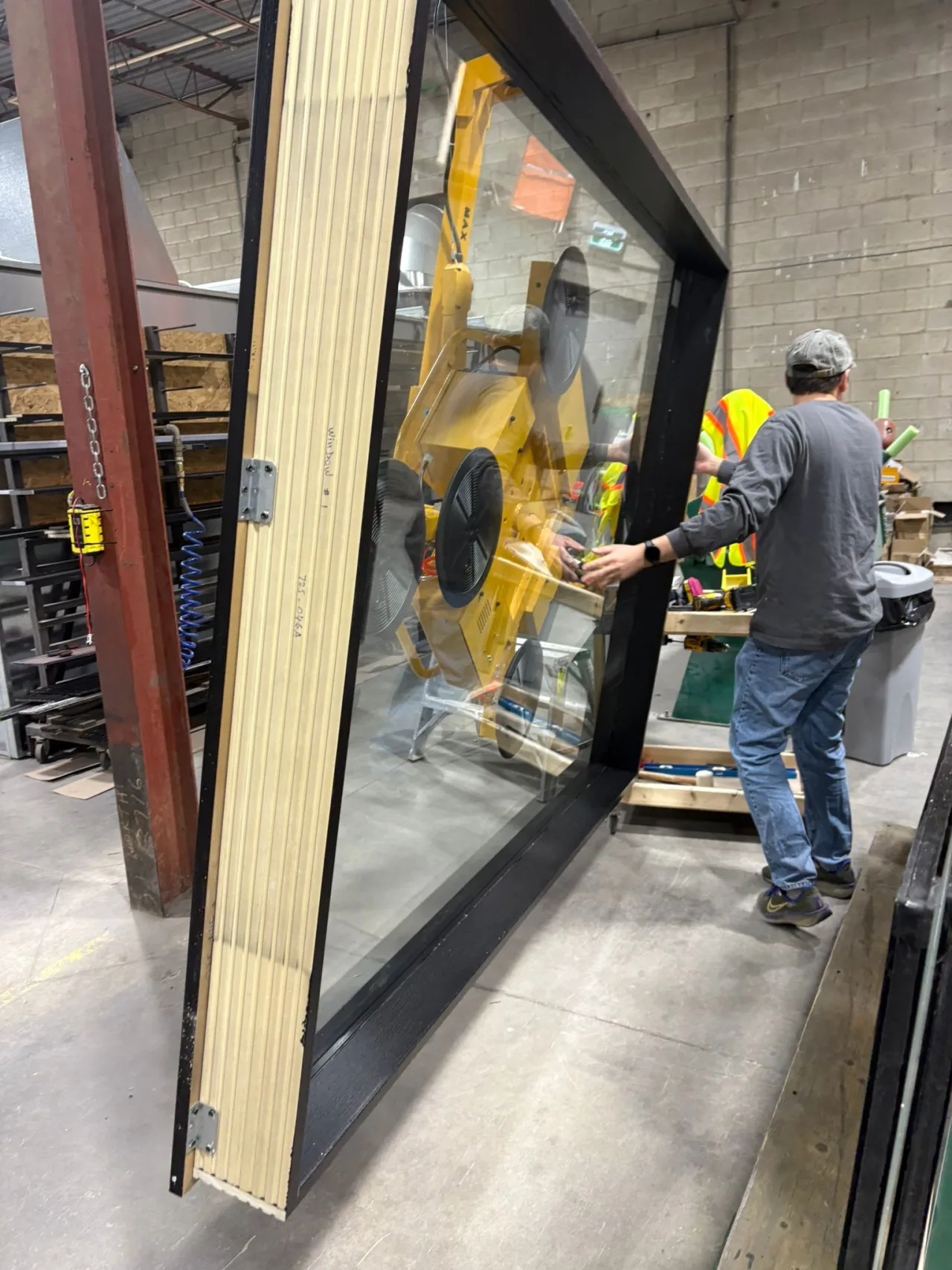
Customer-shared workshop photo from Canada. This shows an actual handling arrangement; it does not identify the exact models compared below.
START WITH THE HANDLING METHOD
Equipment options to discuss
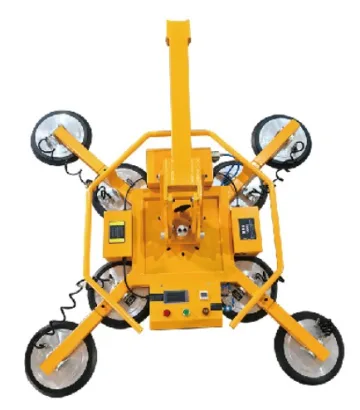
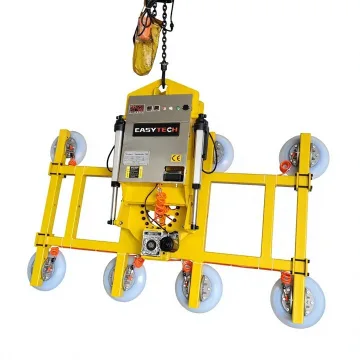
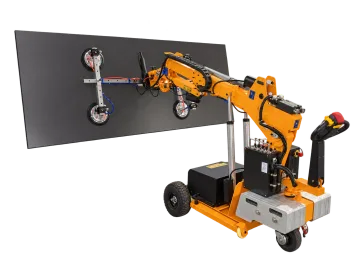
The two suspended frames below use a crane hook and differ in movement control. The WSR-400MINI is a wheeled installation robot. Decide whether your task needs a suspended lifting attachment or a machine that also positions the glass from the floor.
Some images illustrate the equipment series; the supplied configuration may differ.
Maximum rated load400 kg; working-position limits applyLoad limitationsVaries with outreach and posture; use the load chart. Maximum height is not the full-load height.
A suspended vacuum frame handles the glass through suitable lifting equipment. Review the crane or hoist, hook connection, total suspended load and required movement together. A floor-based installation robot has a different working envelope: its usable load depends on outreach and posture, and the route through the site matters.
Manual and powered movement are different choices
For the ETJSB-G600 configuration, the published movements are manual. The ETJSB-G600F configuration provides electrically driven tilting and rotation. Choose according to the required orientation change and the working space; maximum load alone does not explain this difference. Open each model’s complete PDF to compare the actual configuration.
Check the glass contact and the handling path
Identify flat or curved glass, coatings, protective films, joints and available pad contact areas.
Describe whether the panel starts horizontally, vertically or in a rack.
Show obstacles around the edges and the required placement angle.
For outdoor installation, assess site and weather conditions within the applicable equipment instructions and lifting plan.
A customer-shared workshop application
Canadian customer photo of a suspended lifter handling a framed glass panel. This is an application record, not a customer quote or a model-specific capacity test.
Does the maximum lifting height mean maximum load at that height?
No. For installation robots such as WSR-400MINI, use the load chart for the actual outreach and posture. The maximum lifting height and maximum rated load are different limits; they must not be combined into an unsupported operating point.
What should I send before asking for a quotation?
A simple sketch of the pickup and placement positions, glass sizes and the available lifting equipment is more useful than a capacity request alone. Include the heaviest panel as well as the smallest panel, because pad placement and edge clearance must work for both.
yes we tested and it works perfect
i am working to buy you more (but with battery)
The customer replied after a question about assembly and testing. The battery-powered unit was an enquiry about a possible future purchase, not a confirmed repeat order.